AEROPUS I,
A.S.P.C. (Archive for Small Press & Communication), Antwerp, 1982. (edited by Guy Schraenen)
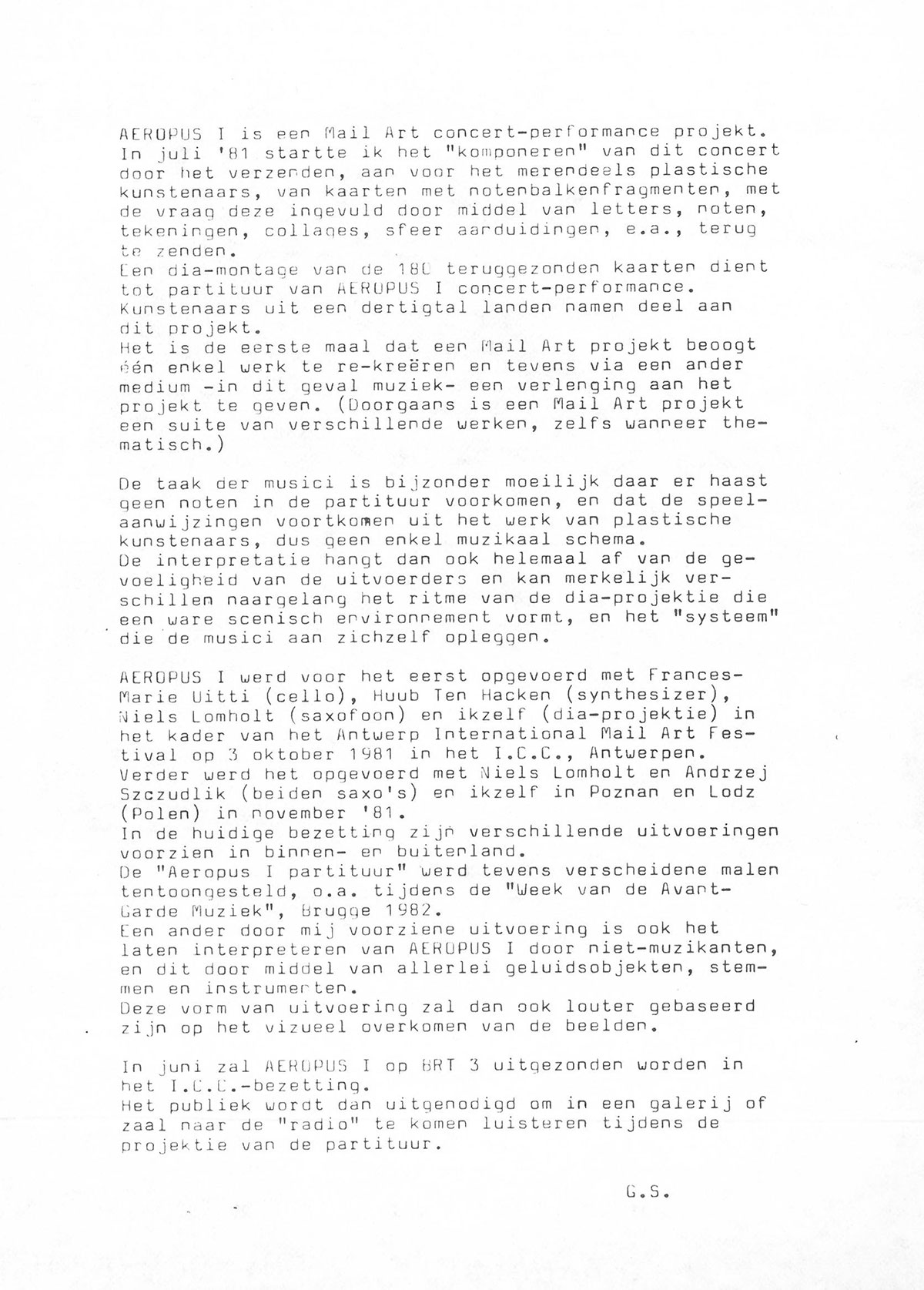
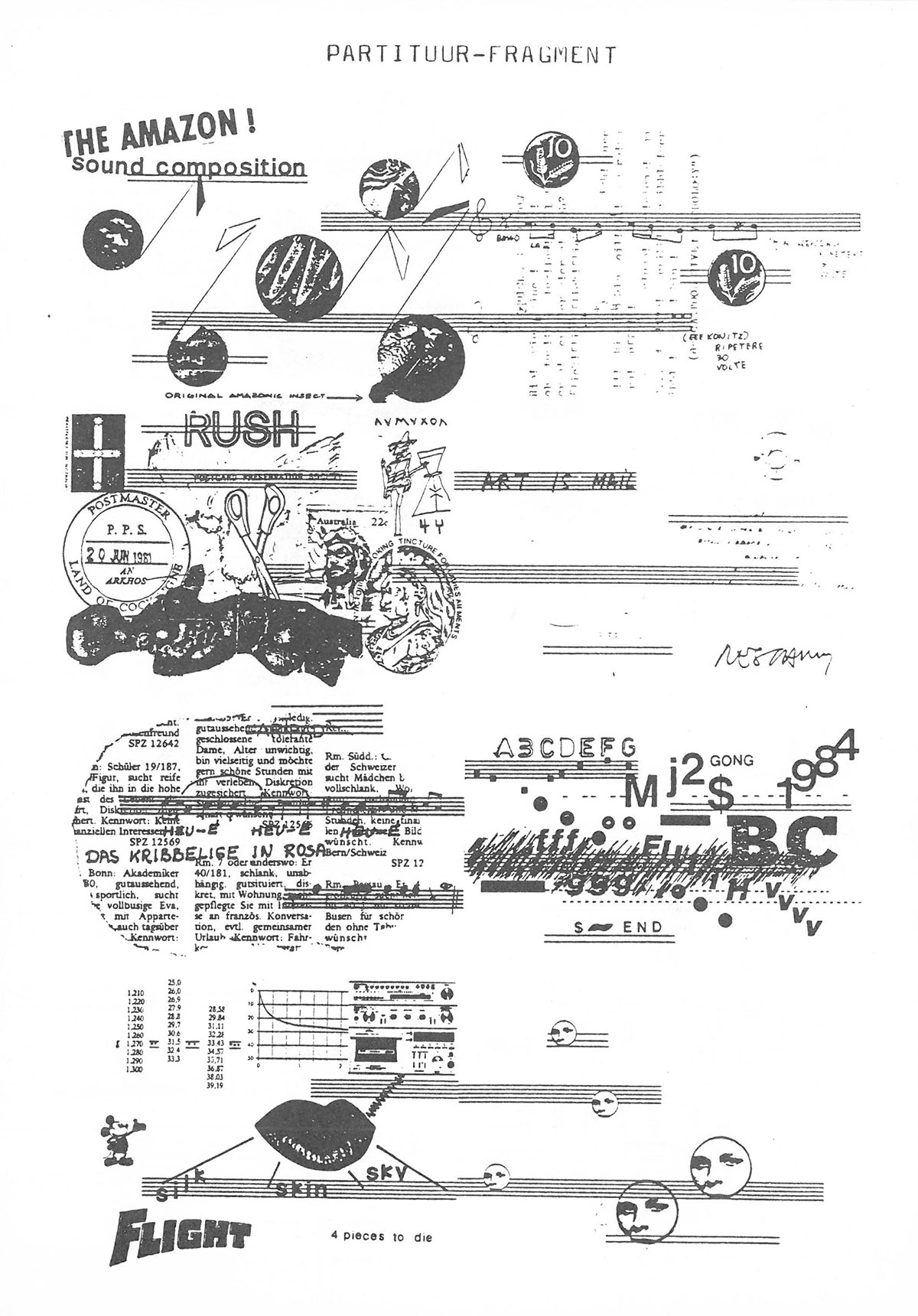
AEROPUS I stands as one of the more ambitious attempts within the international mail art network to transform a distributed correspondence project into a live, collective sound event. Conceived by Guy Schraenen — founder of Antwerp's Archive for Small Press & Communication (A.S.P.C.) and one of the network's most active organizer-archivists — the project began in July 1981, when Schraenen mailed cards printed with fragments of music staves to a largely visual-arts based network of correspondents, inviting them to complete the fragments with letters, notes, drawings, collages, and indications of mood or atmosphere. Where most mail art projects, in Schraenen's own words, remain "a suite of individual work, even when the project is on a theme," AEROPUS I was conceived explicitly to re-compose a single collective work and extend it into an entirely different medium — music.
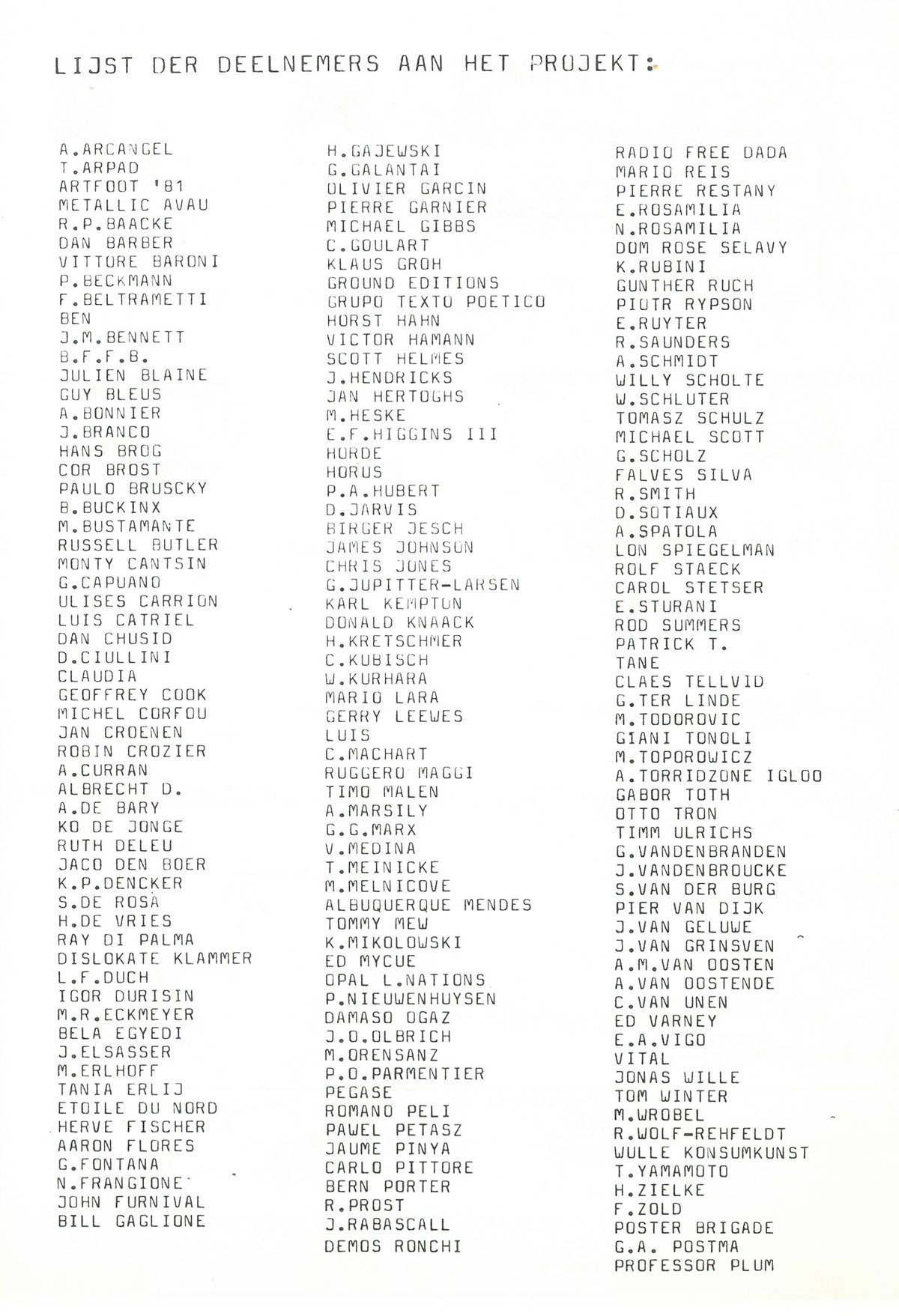
The returned contributions (176 to 180, depending on the source) were assembled into a slide-montage that functioned as the performance's graphic score. Because the "score" contained almost no conventional musical notation, the interpreting musicians worked instead from the visual, gestural, and atmospheric cues left by the plastic artists — meaning the piece's realization depended heavily on the performers' sensibility and on the pacing of the slide projection itself. The world premiere took place on 3 October 1981 at the I.C.C. in Antwerp, within the framework of the Antwerp International Mail Art Festival, performed by Frances-Marie Uitti (cello), Huub Ten Hacken (synthesizer), Niels Lomholt (saxophone), with Schraenen himself operating the slide projection. A second cast — Niels Lomholt and Andrzej Szczudlik on saxophones, with Schraenen again on projection — performed the work in Poznań and Łódź, Poland, in November 1981. The score was subsequently exhibited during the "Week van de Avant-Garde Muziek" in Bruges in 1982, and broadcast on Belgian radio (BRT 3) that June, with audiences invited to listen "live" in galleries during the slide projection. Schraenen also planned a further interpretation of the score by non-musicians using everyday sound objects, voices, and instruments — a purely visually-triggered performance without musical training as a prerequisite.
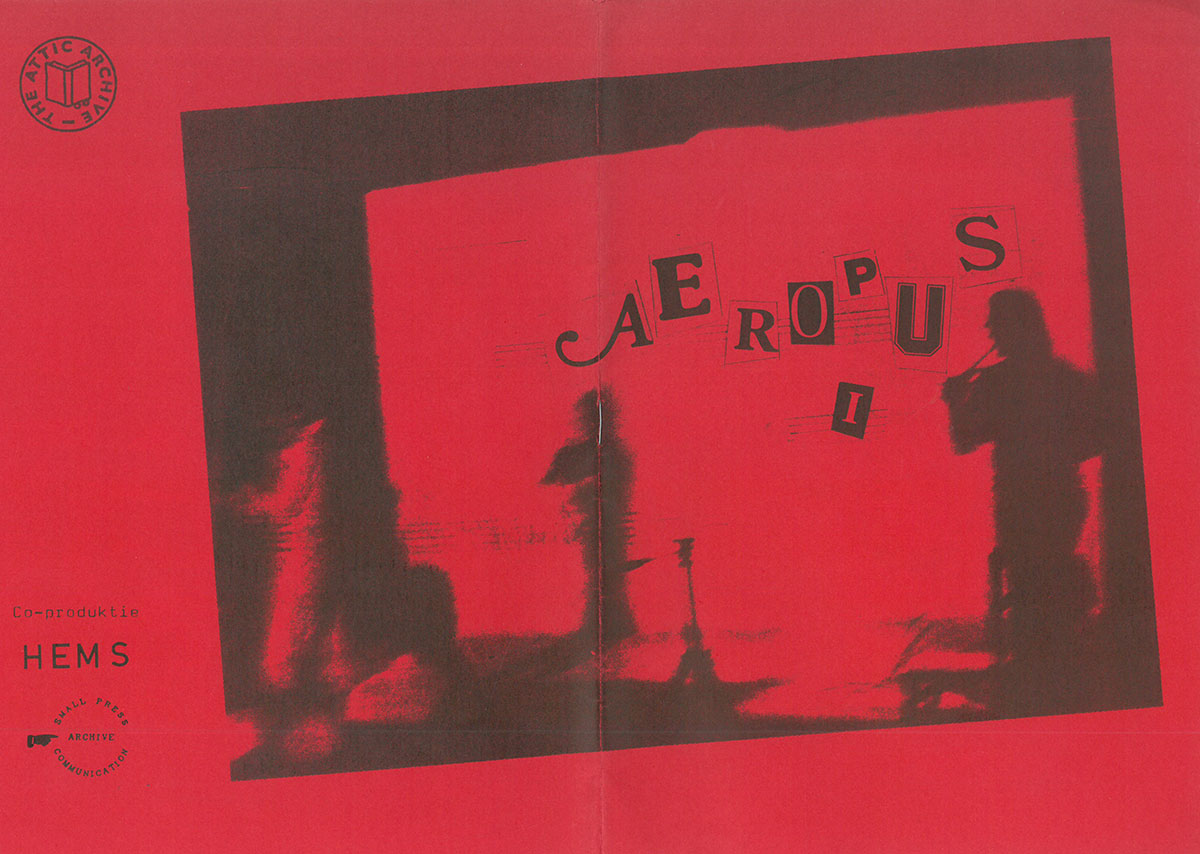
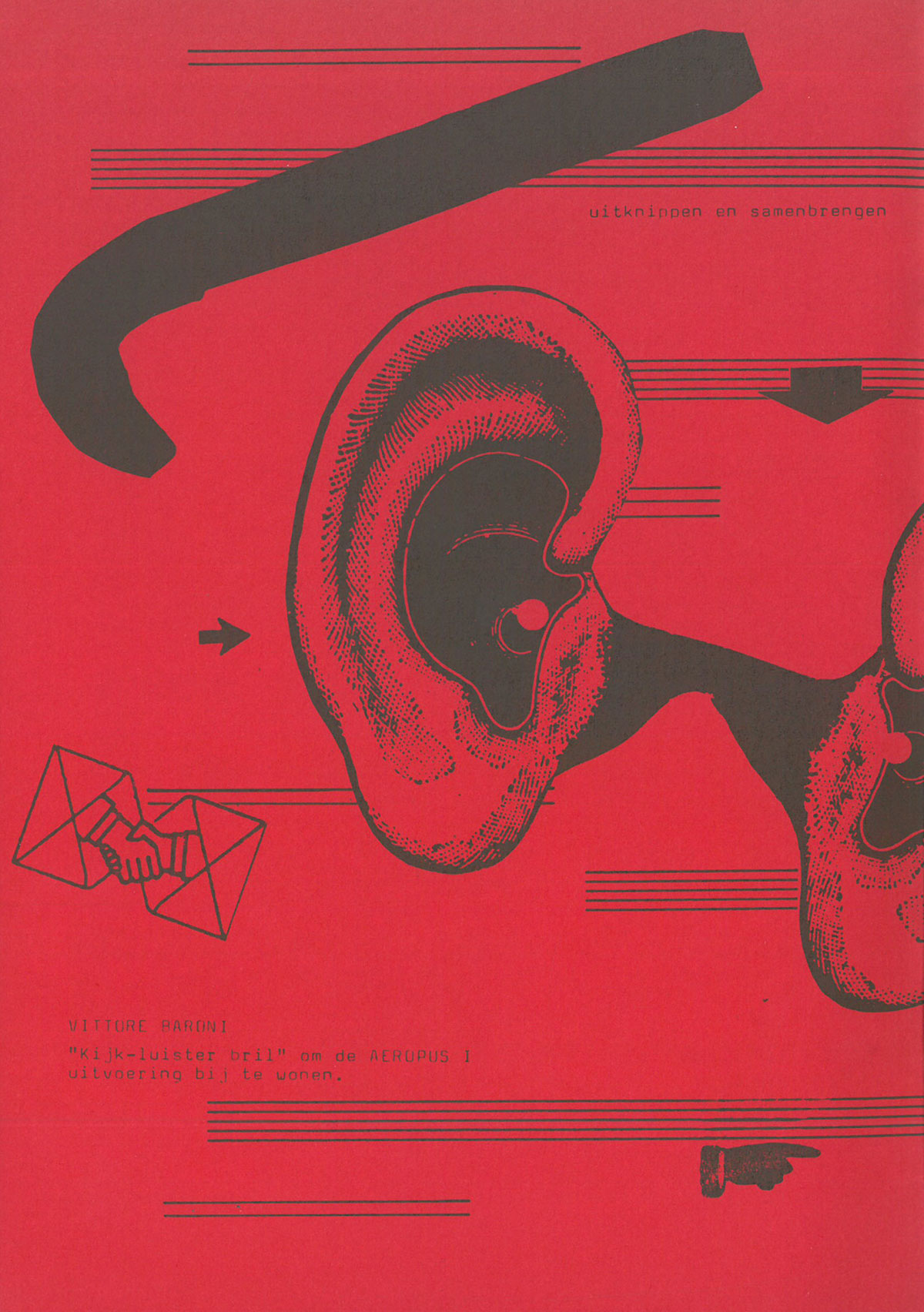
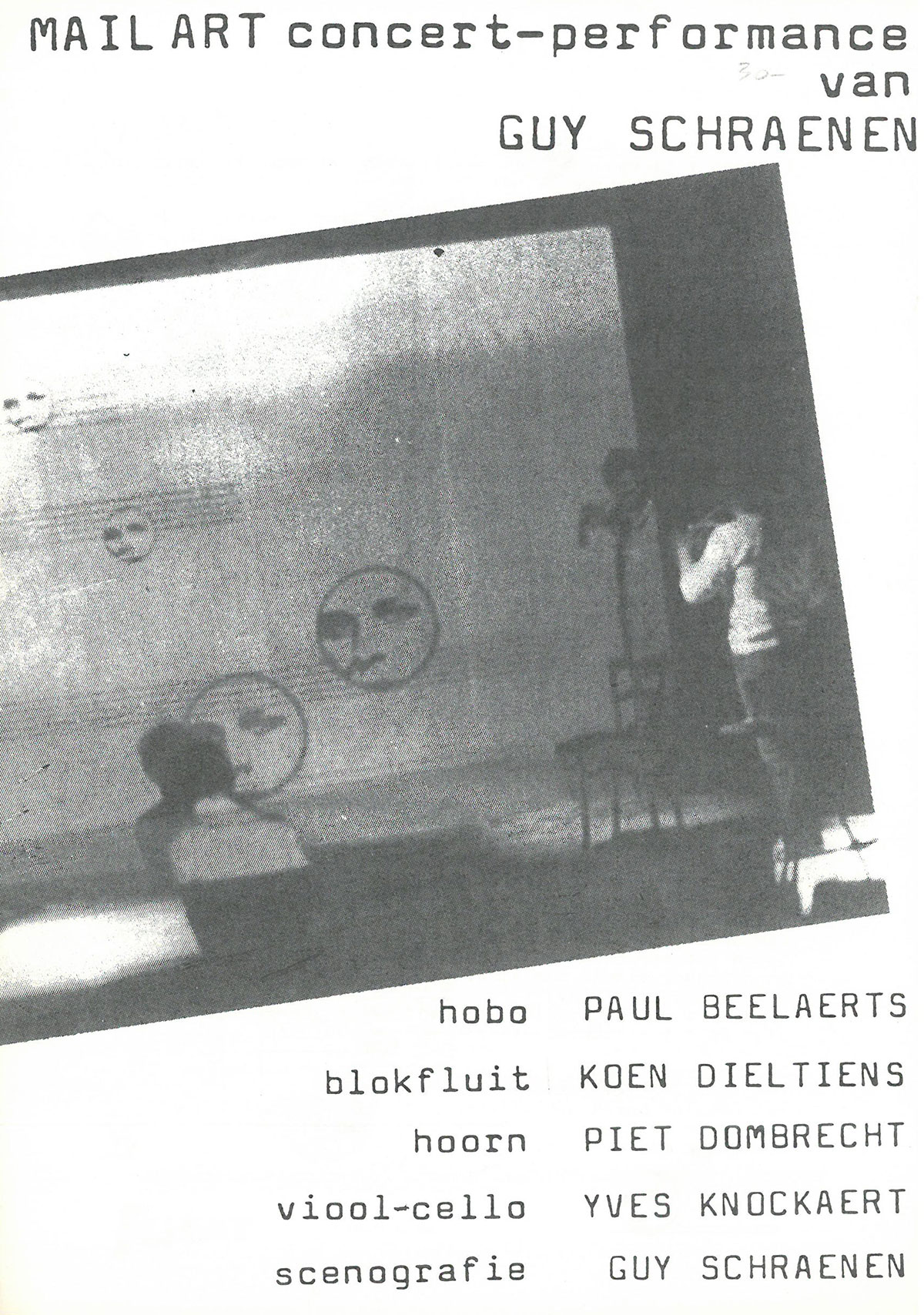
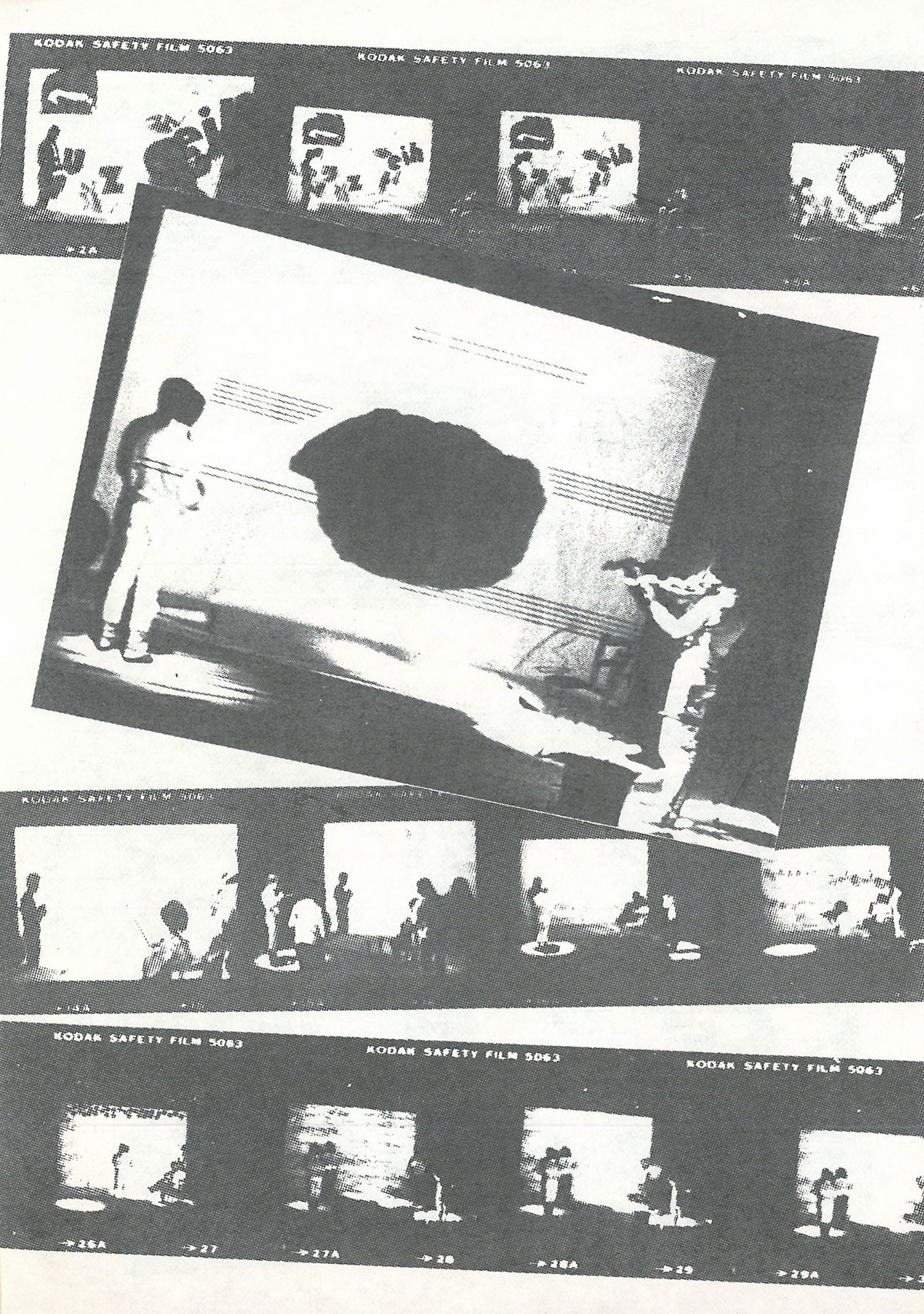
The concert-performance illustrated in this booklet — credited to Paul Beelaerts (oboe), Koen Dieltiens (recorder), Piet Dombrecht (horn), Yves Knockaert (violin-cello) under Schraenen's scenography — represents one of these later realizations, co-produced with HEMS. Vittore Baroni's contribution of "look-listen glasses" ("Kijk-luister bril"), offered to audience members attending the performance, underscores the playful, participatory character that recurs throughout Schraenen's mail art practice.