In 1983 the Drents Museum in Assen, the Netherlands, mounted an exhibition on the hunebedden — the Neolithic megalithic tombs native to the province of Drenthe — and invited Dutch artist and mail-art networker Ko de Jonge to realize a parallel Mail Art project within that context. De Jonge's concept drew a direct analogy between the megalith and the postal network: just as the ancient tomb was built from stones carried from distant parts of the continent and united through collective effort, so too would his "Megalithic Tomb" be built from stones gathered by roughly 100 invited artists across Europe, mailed to Middelburg, and reassembled into a single sculptural monument for exhibition. The Call, issued through de Jonge's Postkode imprint, asked each participant to locate a natural stone, document its find-spot photographically or by drawing, and send both stone and documentation sheet to the organizer by 31 December 1982.
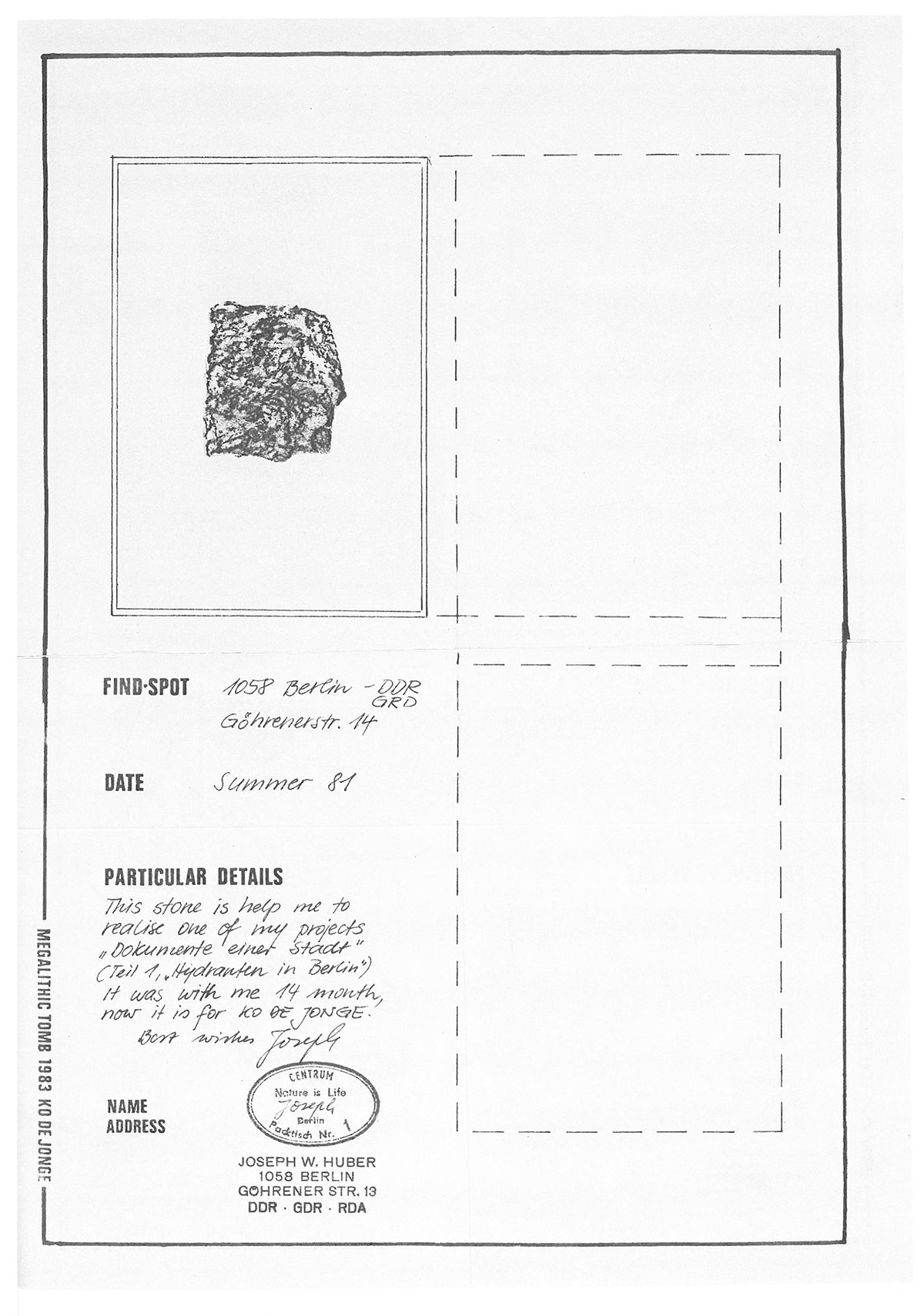
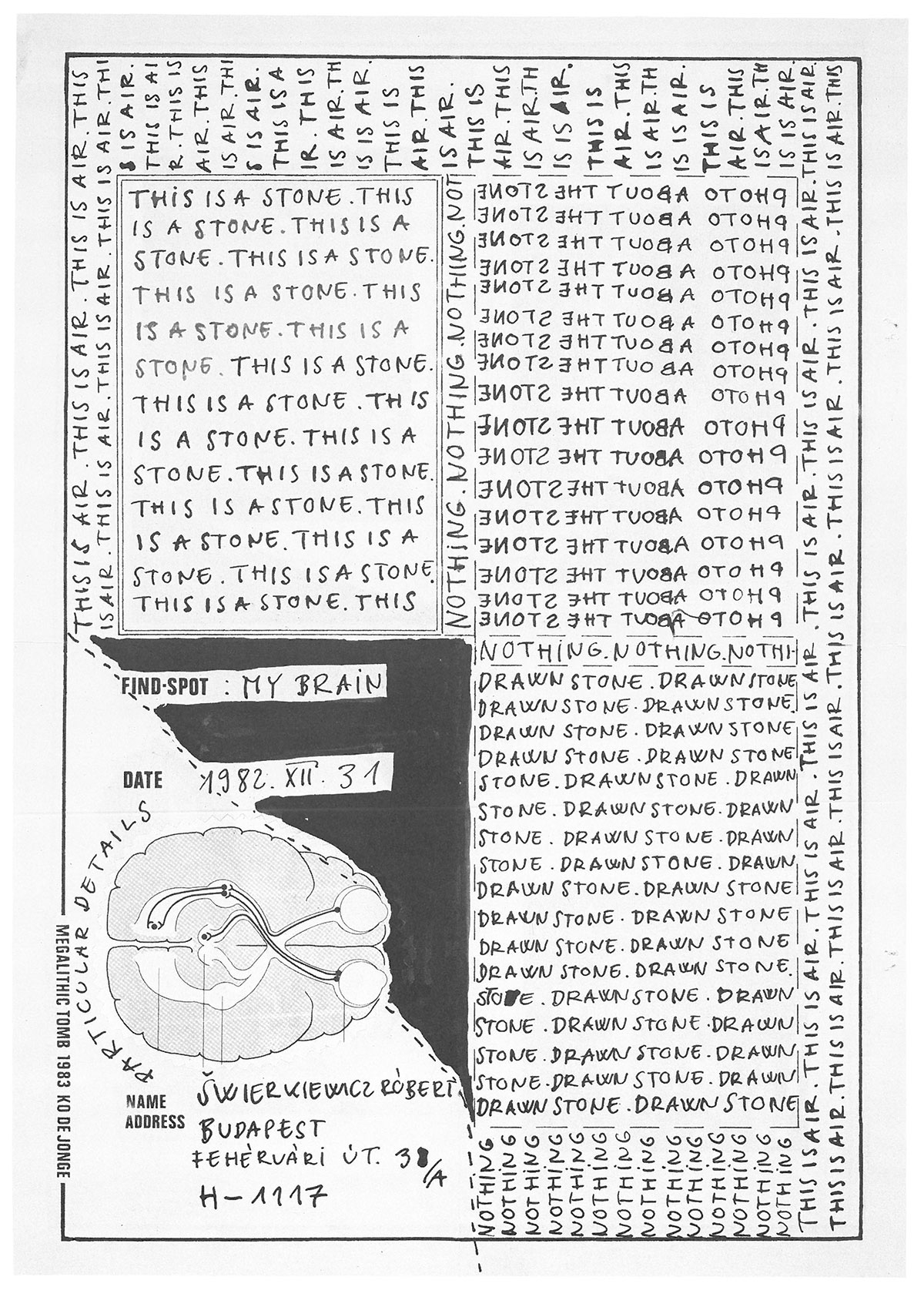
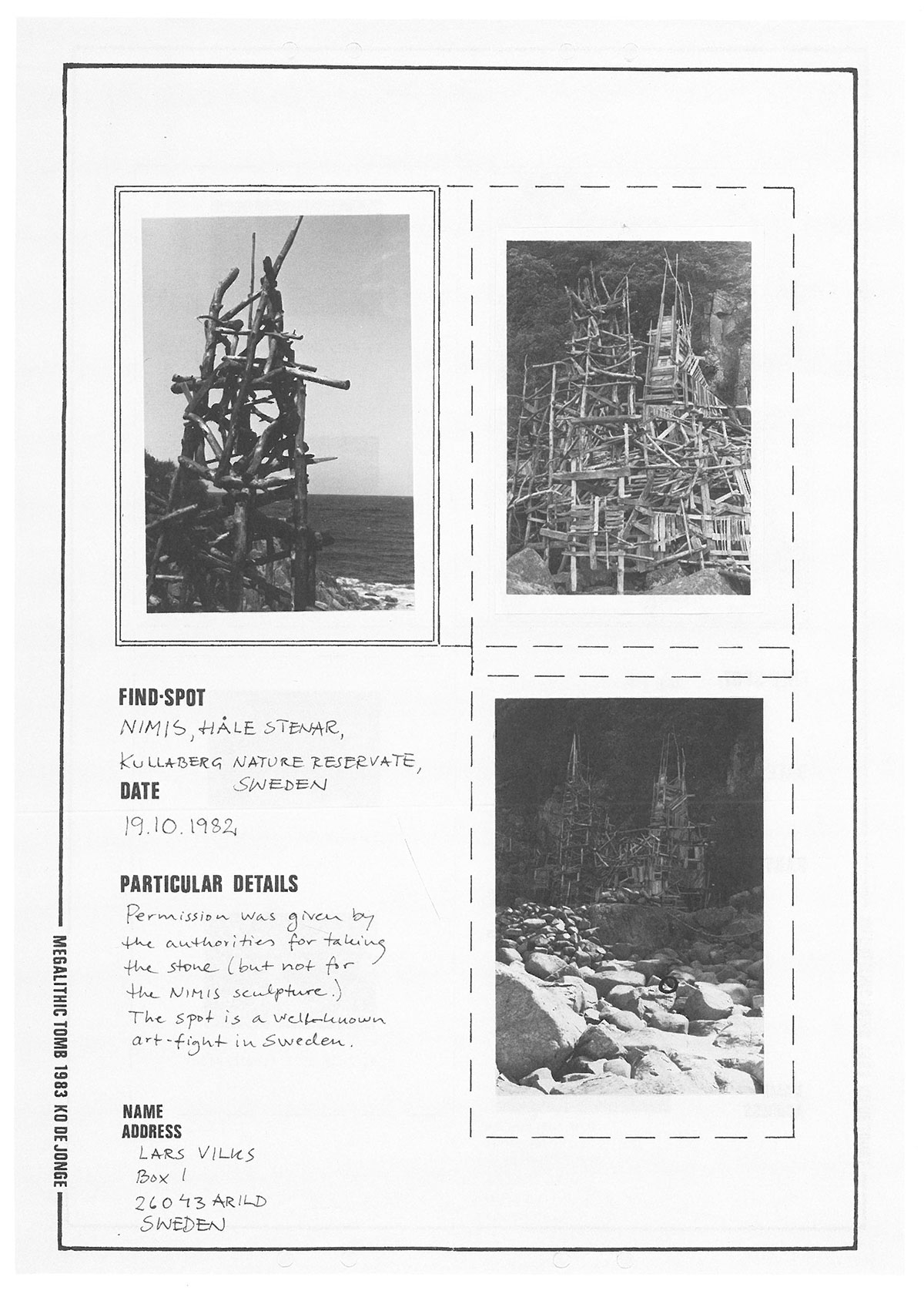
More than 50 artists from 19 European countries ultimately took part, sending stones from locations as varied as a Scottish anti-tank beach barrier, a Hungarian creek bed, a French prehistoric cave, and the Artpool courtyard in Budapest itself. The submissions ranged from straightforward geological documentation to conceptual and poetic interventions — Robert Świerkiewicz's "THIS IS A STONE" text-drawing, Lars Vilks's photographs of his Nimis driftwood sculpture at Kullaberg, and Joseph Huber's stone tied to his own long-running Dokumente einer Stadt project among them. The completed "megalith monument" was assembled and exhibited by de Jonge at the Drents Museum in 1983, with all documentary material displayed alongside it — situating the project within the broader early-1980s mail art tendency of using the postal system itself as a medium for collective, geographically dispersed sculpture.
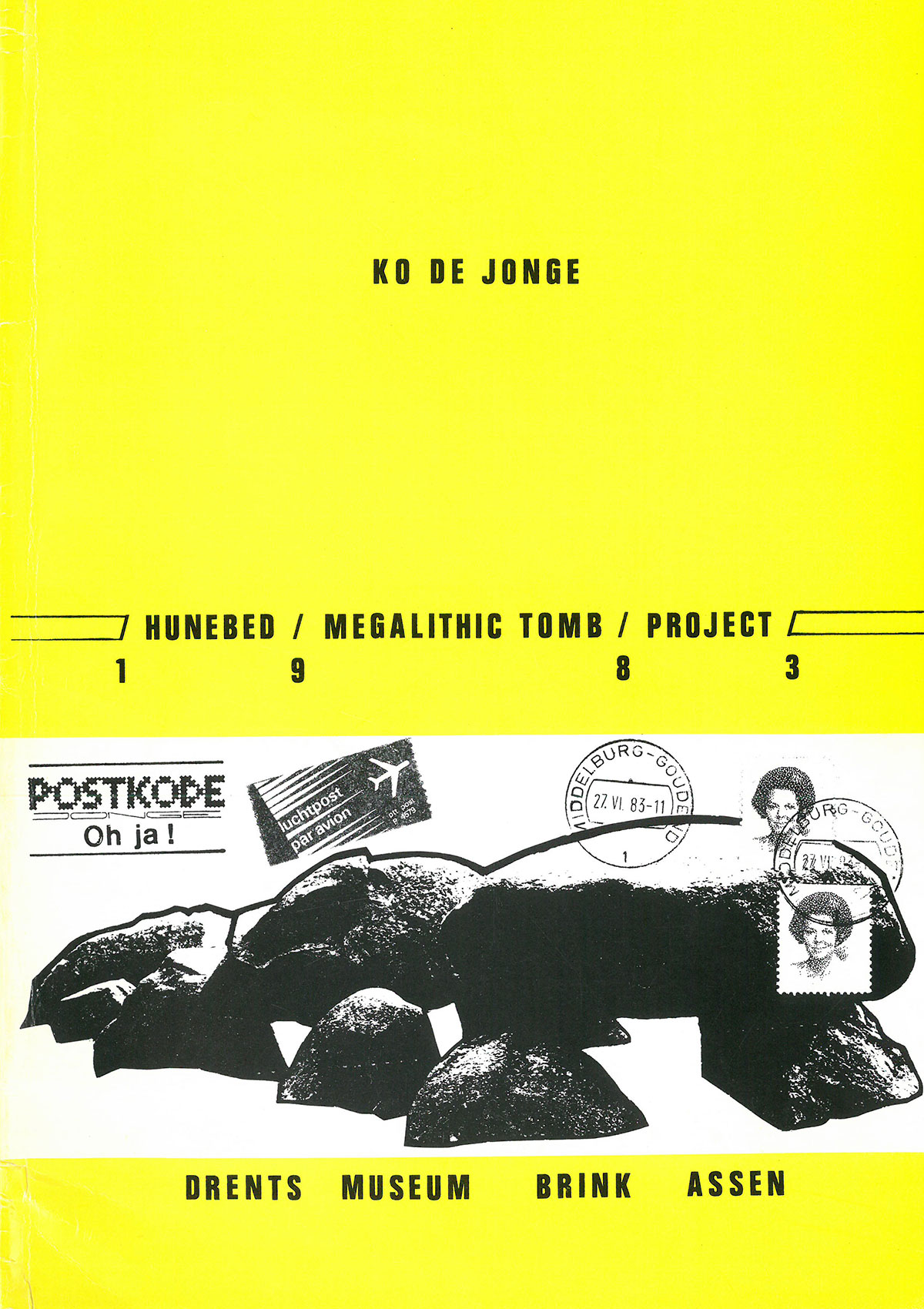
Cover

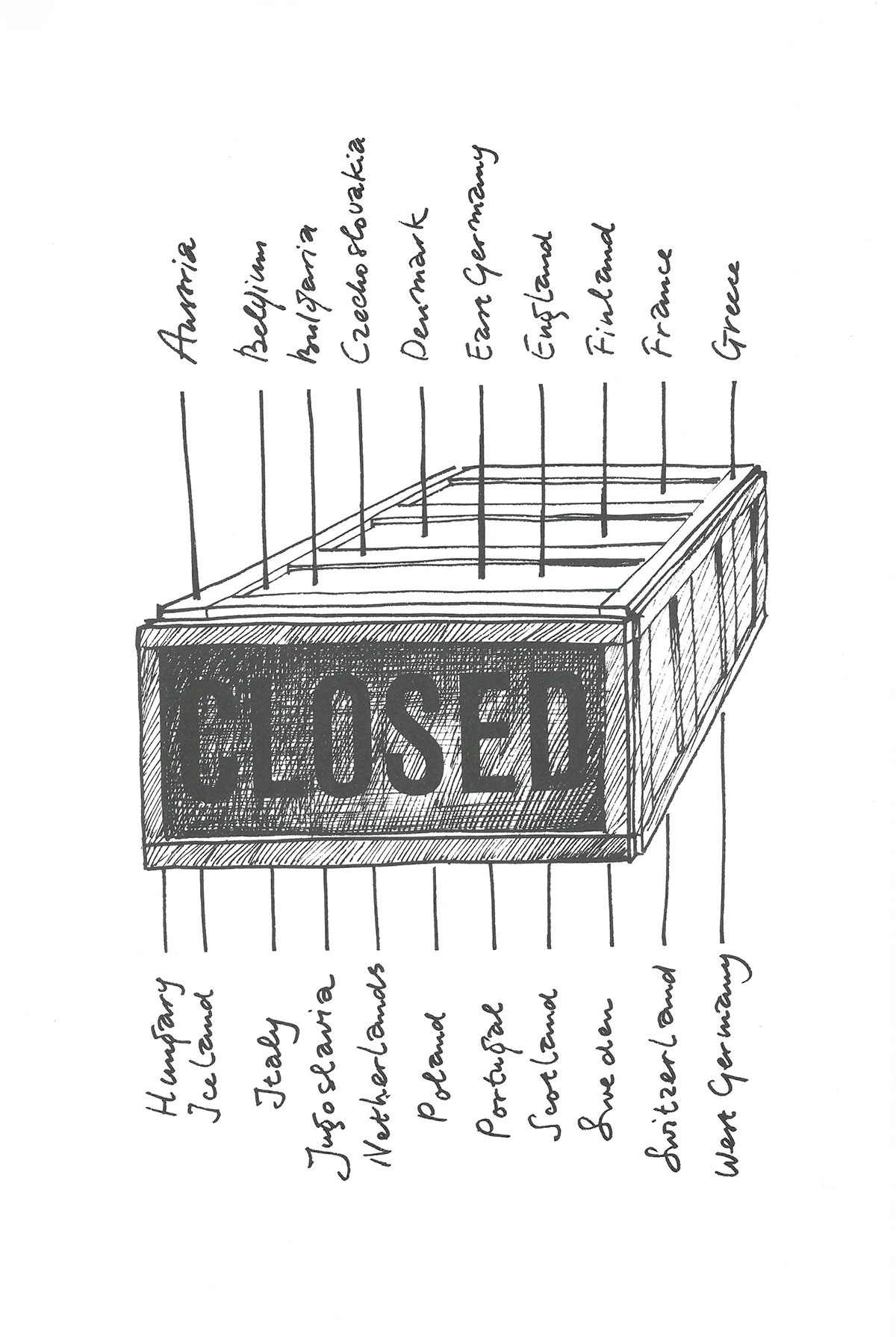
Endpapers/introductory spread. Hand-drawn diagram of a wooden crate marked "CLOSED," with the names of the 21 participating countries.

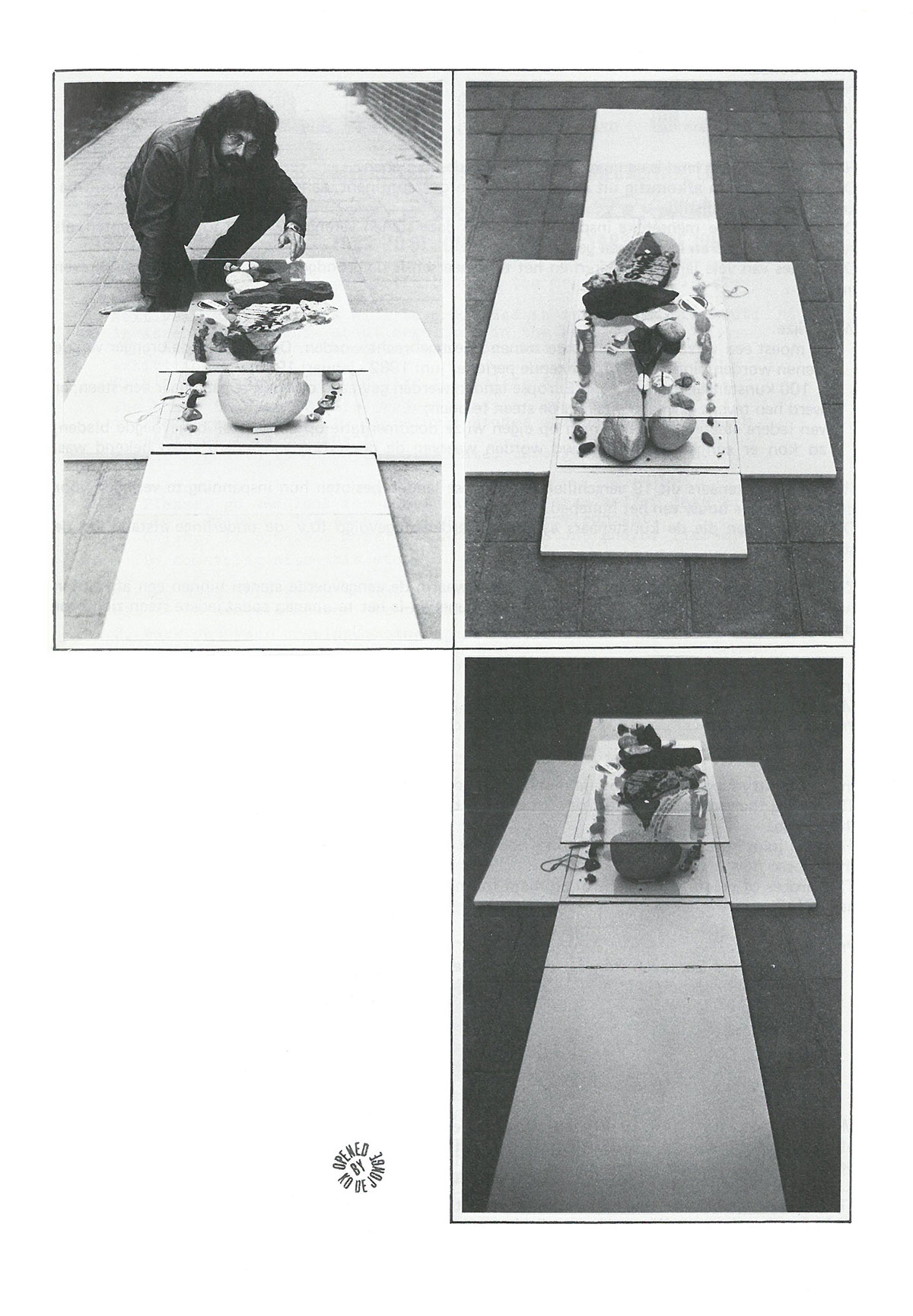
Three photographs of Ko de Jonge arranging stone-based assemblages on an outdoor tablet, stamped "OPENED BY KO DE JONGE." Work by Ko de Jonge.

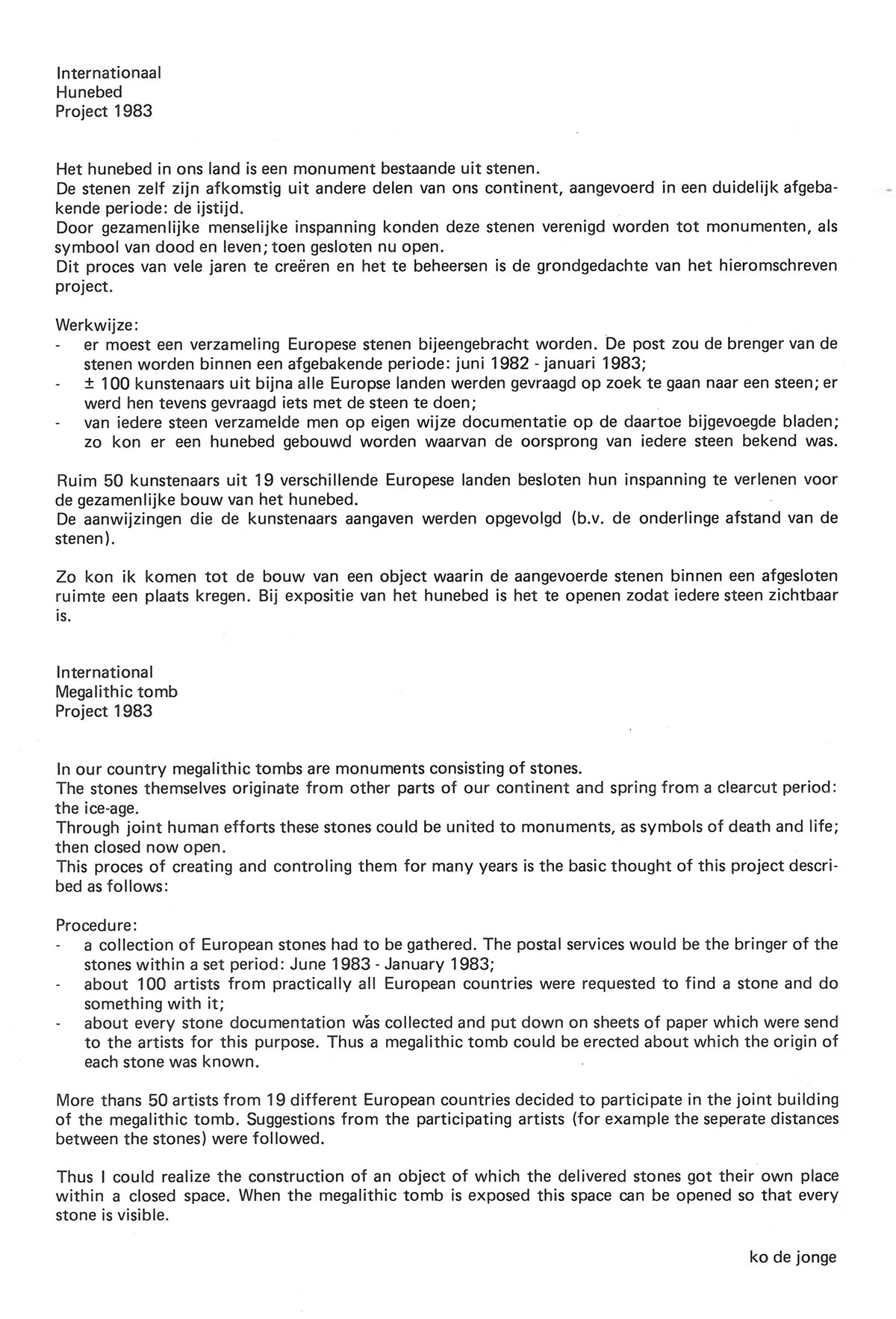
Project statement and Call. Bilingual (Dutch/English) text describing the concept of the "International Megalithic Tomb Project 1983," signed "ko de jonge."

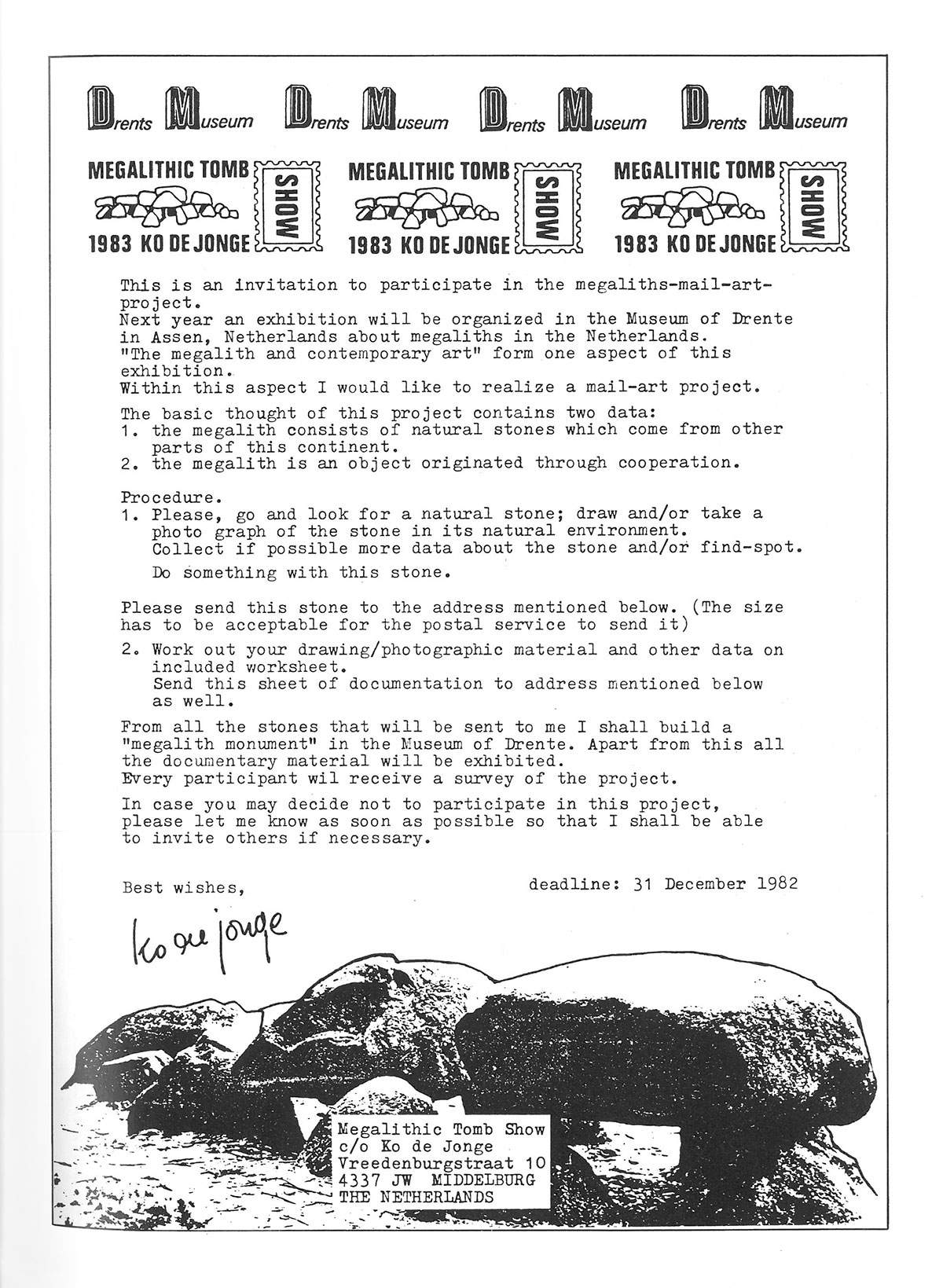
The original invitation/Call, issued through Postkode, deadline 31 December 1982. Work by Ko de Jonge.

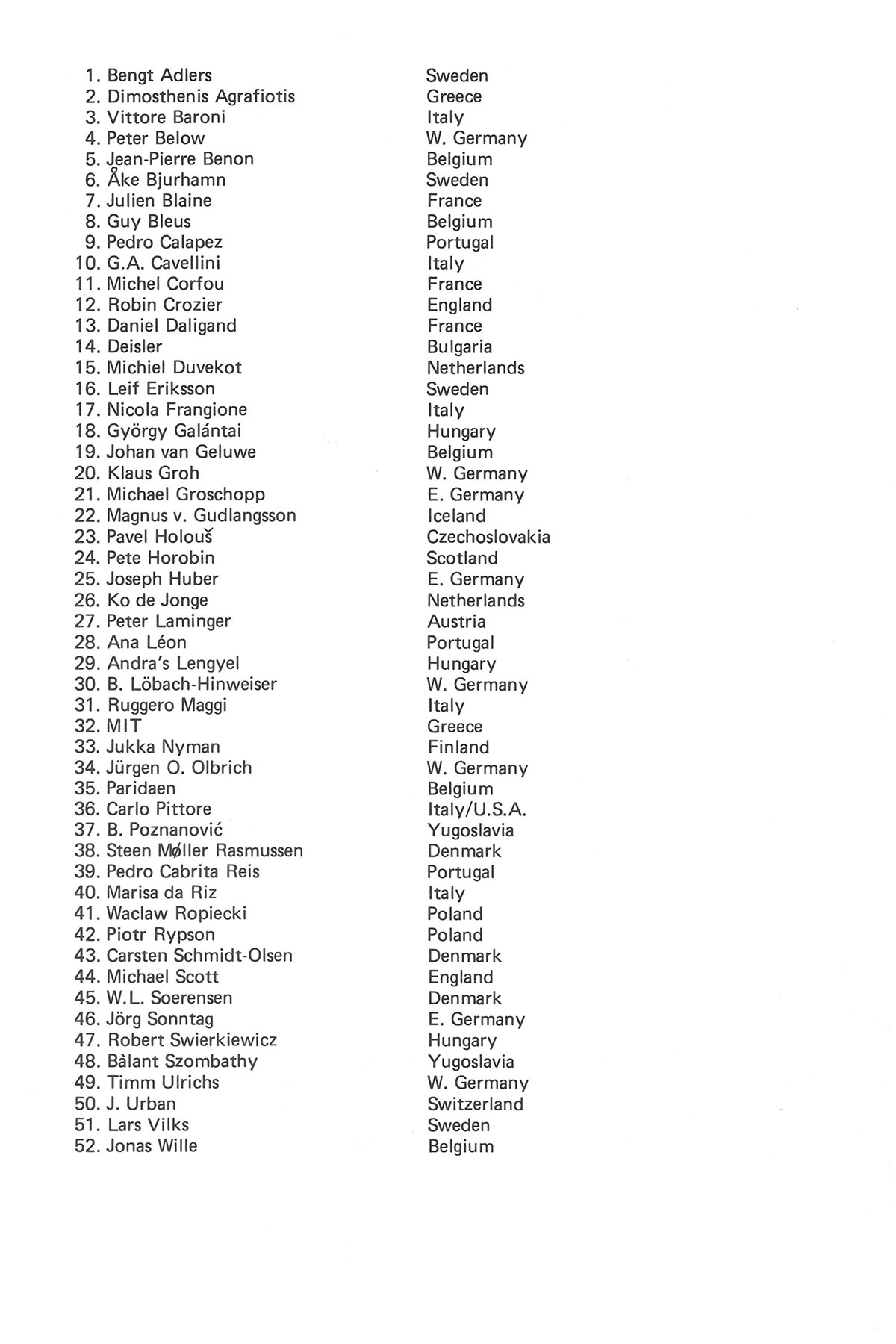
The printed roster of 52 participating artists and their countries.

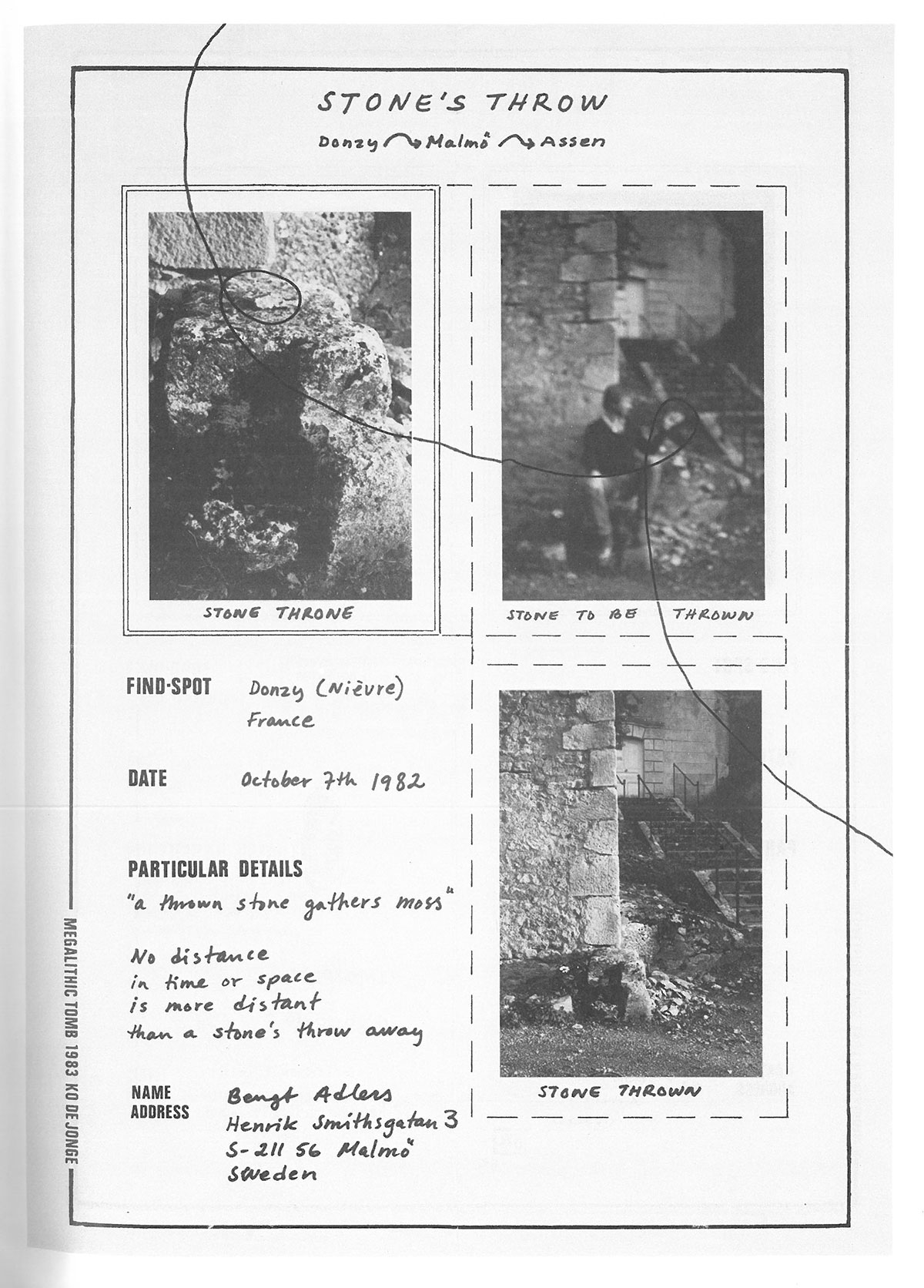
Documentation page "Stone's Throw" (Donzy → Malmö → Assen) by Bengt Adlers.

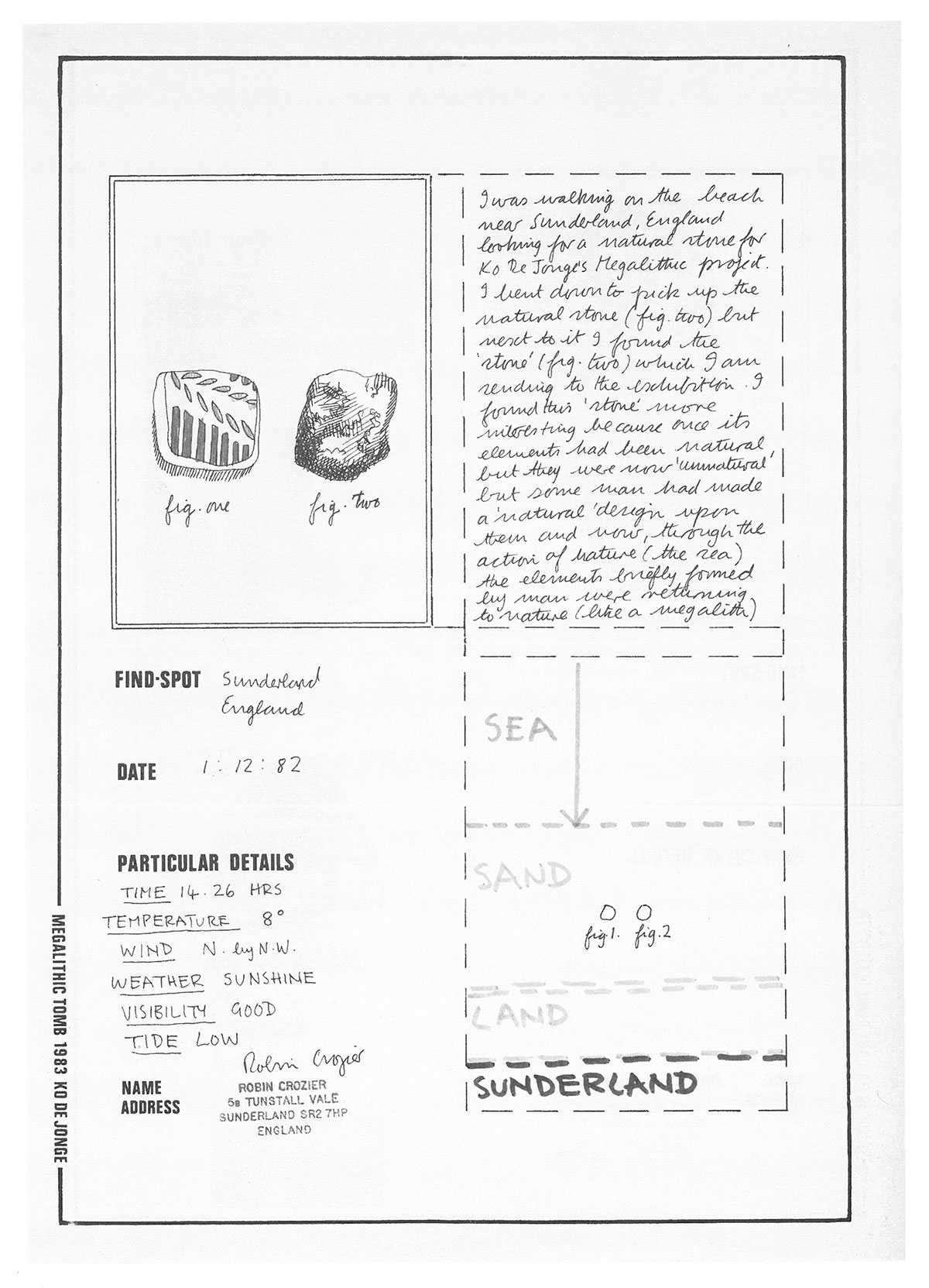
Documentation sheet by Robin Crozier (Sunderland, England).

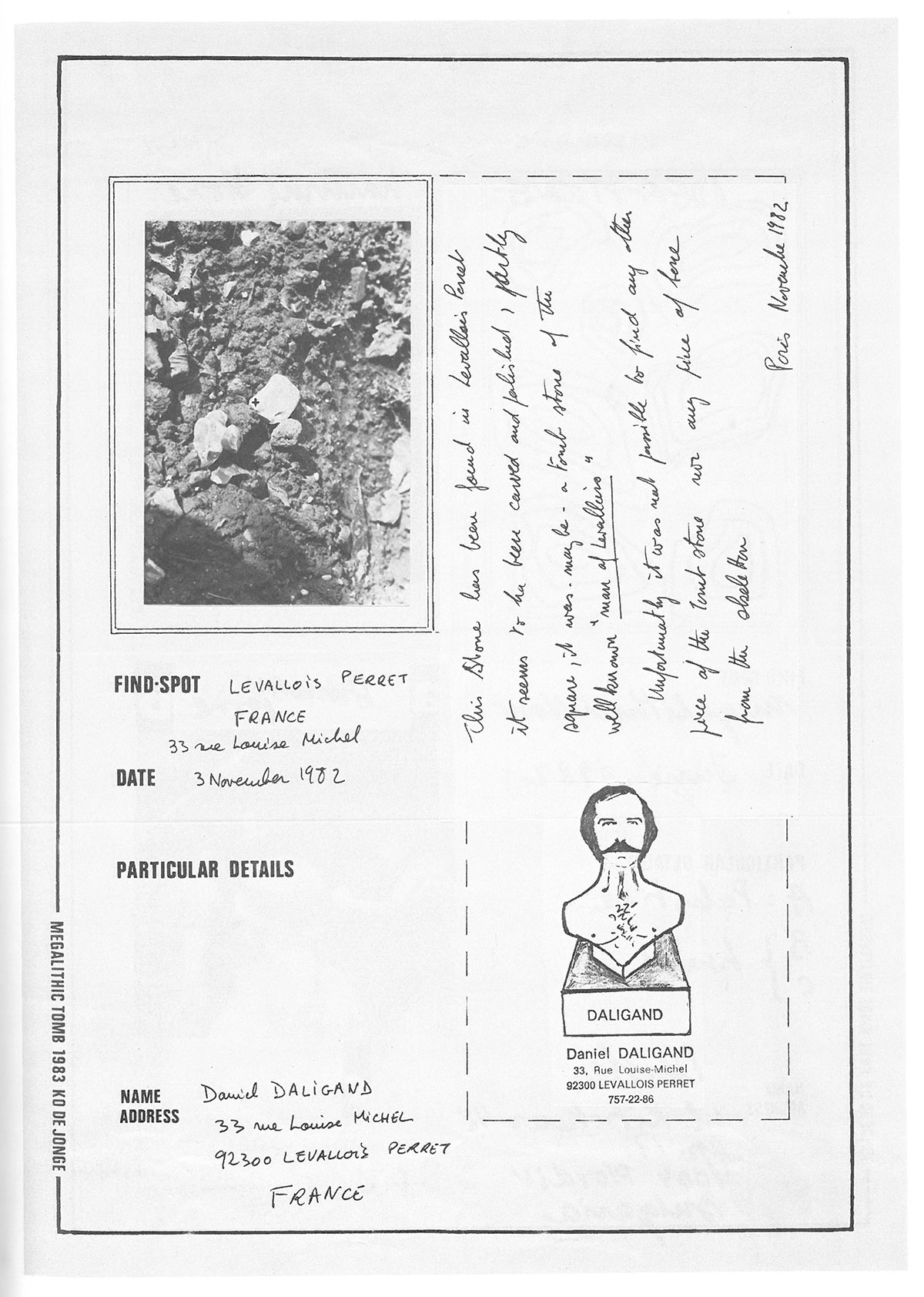
Documentation sheet by Daniel Daligand (Levallois-Perret, France).

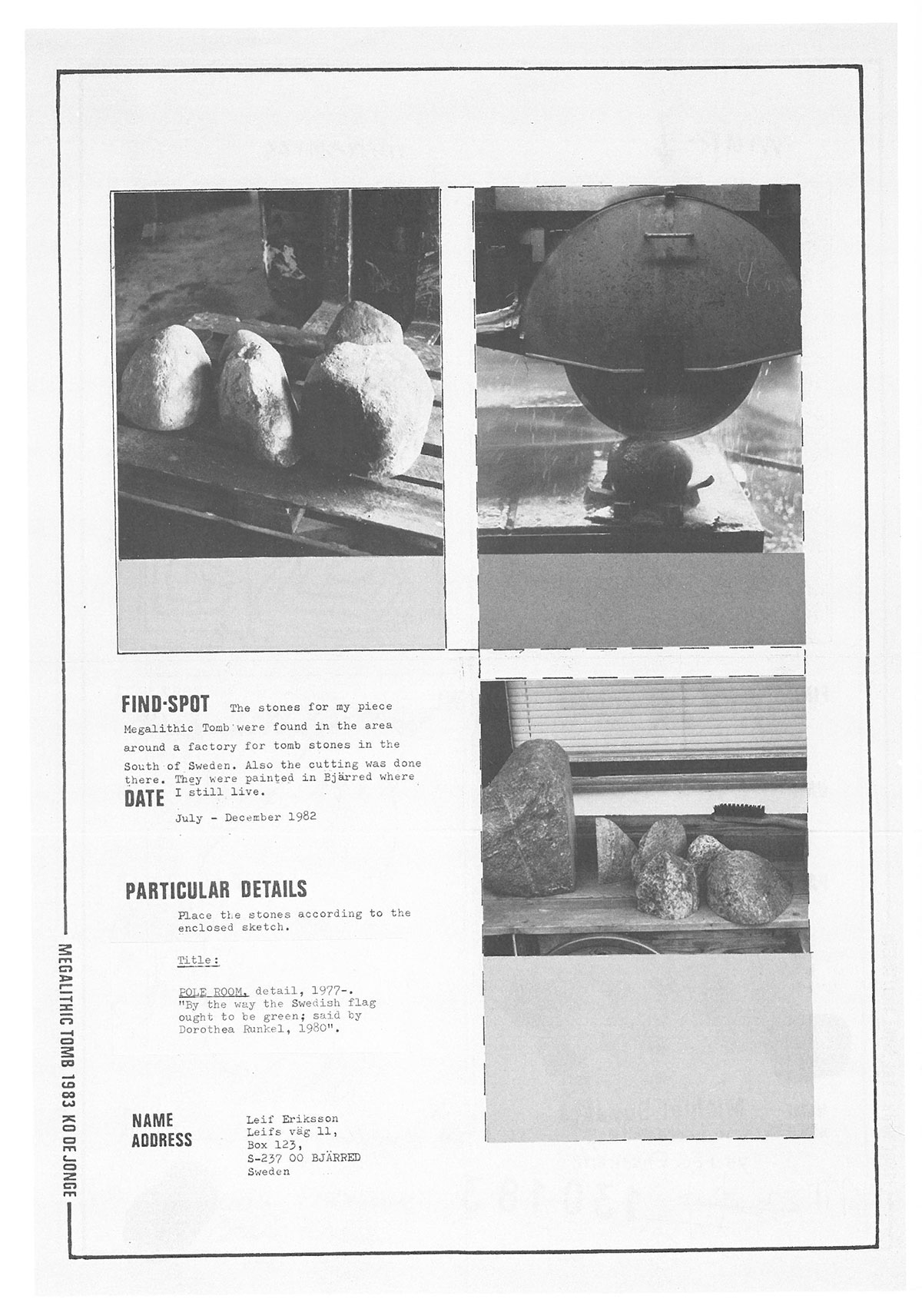
Documentation sheet, "Pole Room" (detail, 1977–), by Leif Eriksson (Bjärred, Sweden).

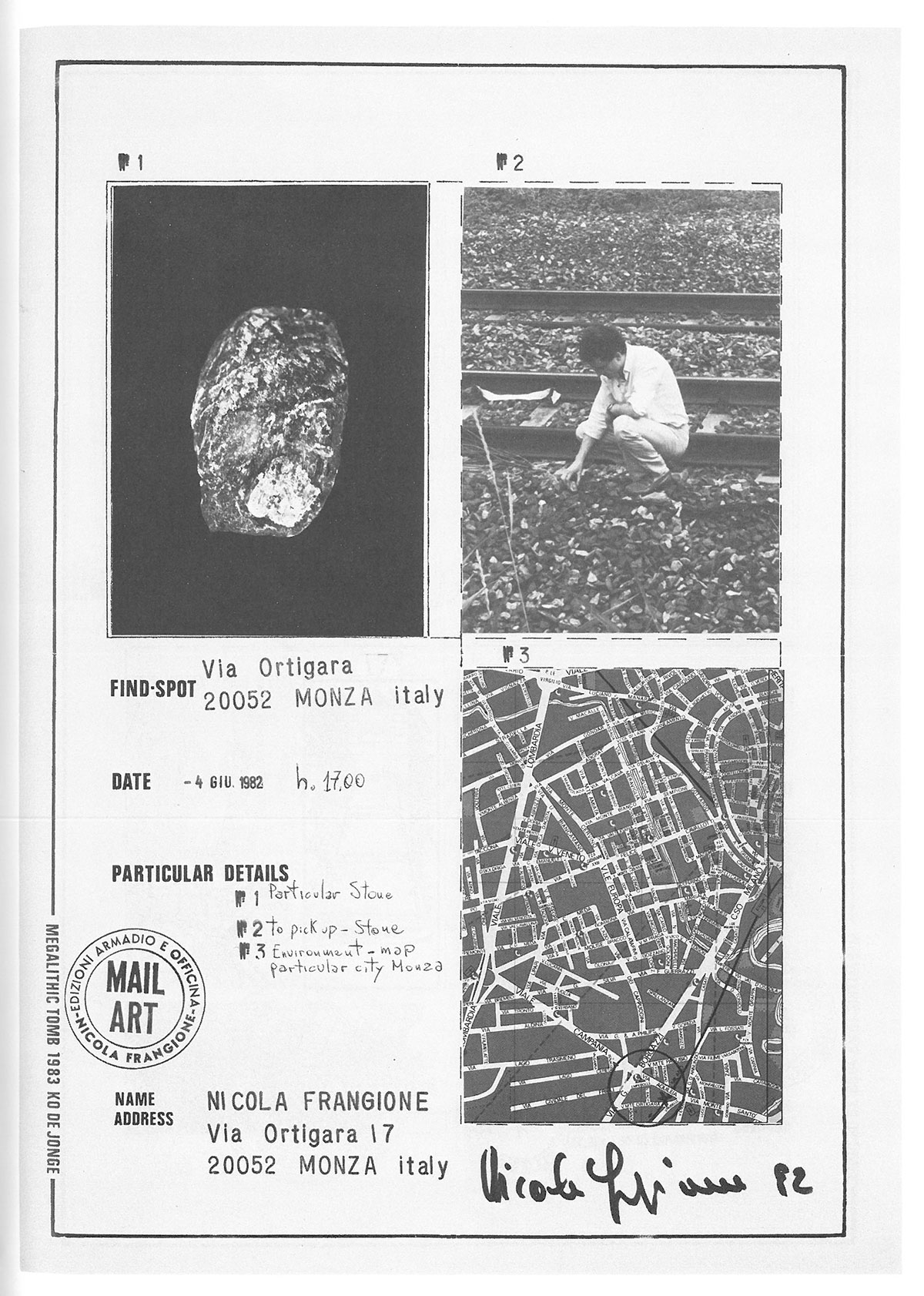
Documentation sheet by Nicola Frangione (Monza, Italy), stamped "MAIL ART – Edizioni Armadio e Officina."

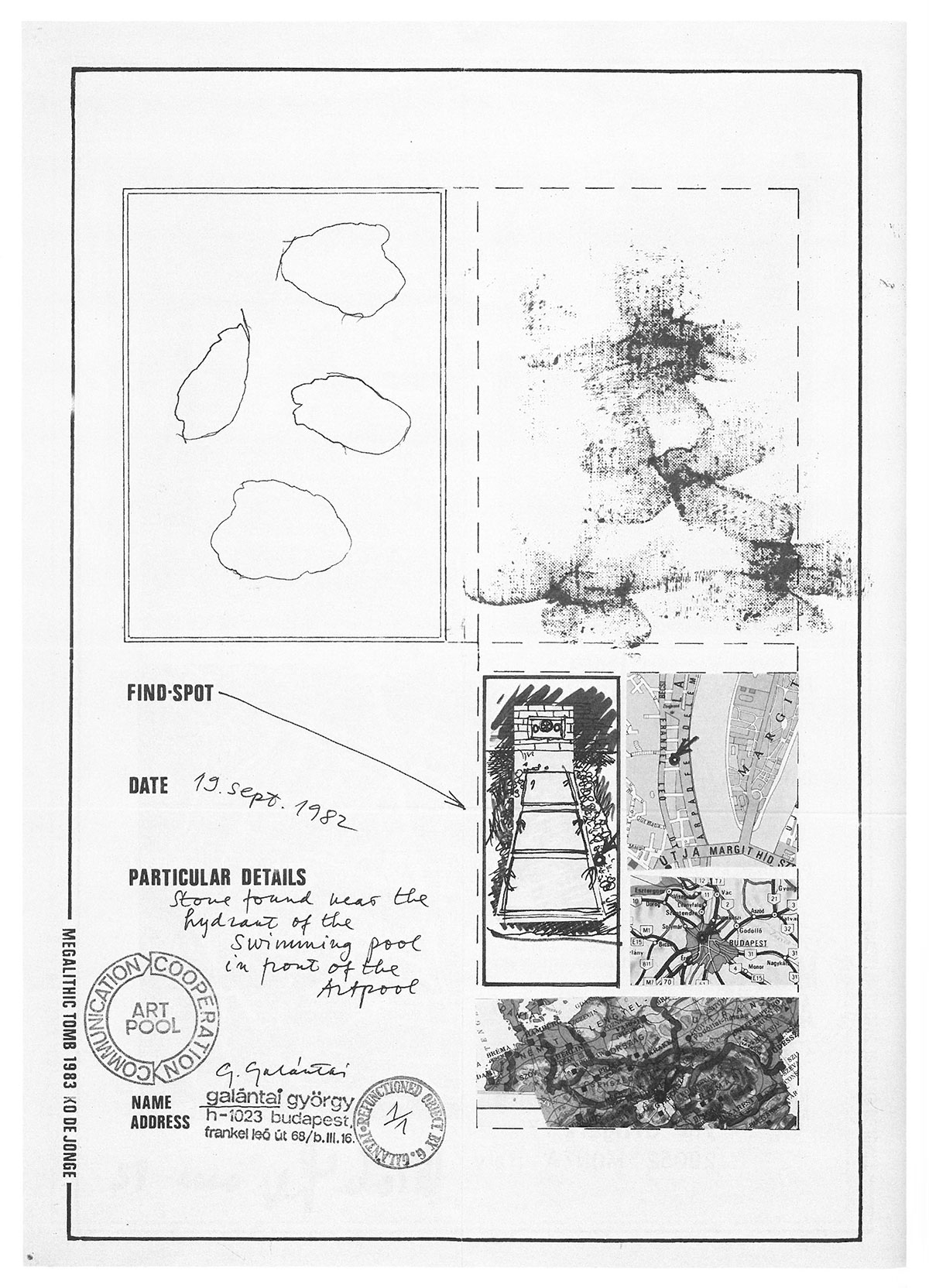
Documentation sheet by György Galántai (Budapest, Hungary), noting the stone was found near the Artpool courtyard, stamped "ARTPOOL – Communication Cooperation."

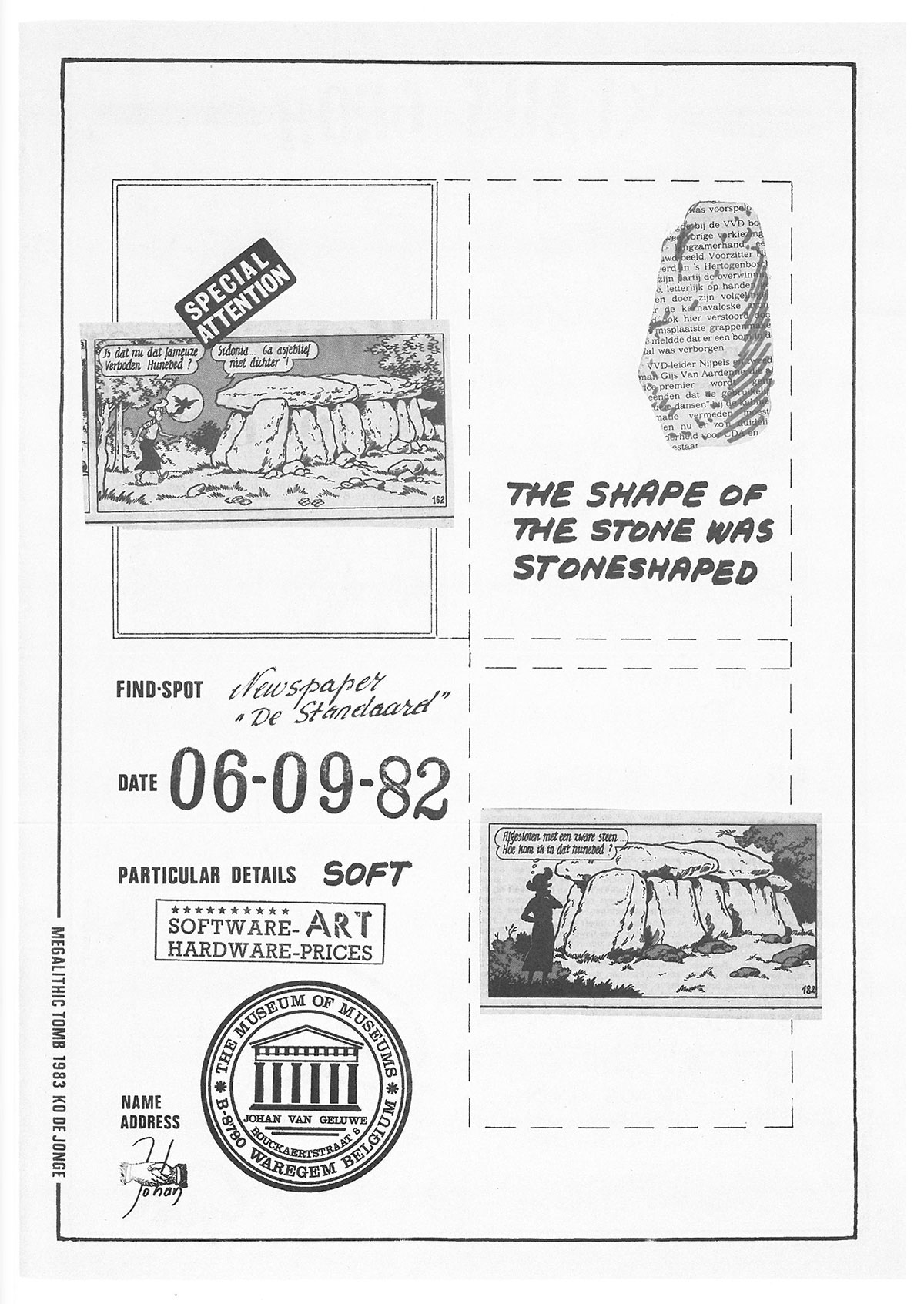
"The Shape of the Stone Was Stoneshaped," collage documentation sheet by Johan van Geluwe (Waregem, Belgium), stamped "The Museum of Museums."

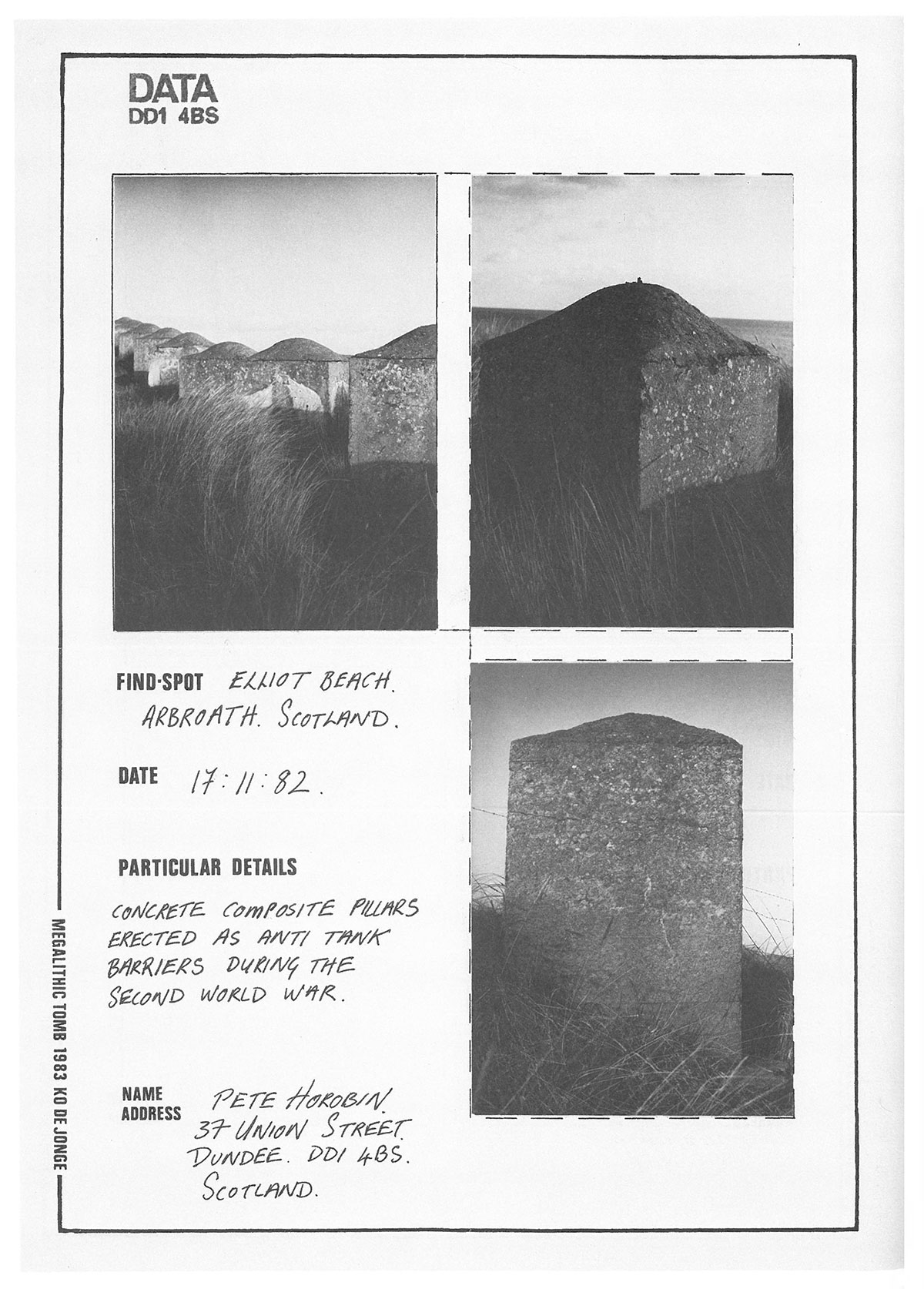
Documentation sheet by Pete Horobin (Dundee, Scotland), stone from anti-tank barriers at Elliot Beach, Arbroath.

Documentation sheet by Joseph W. Huber (Berlin, DDR), stone linked to his project "Dokumente einer Stadt."

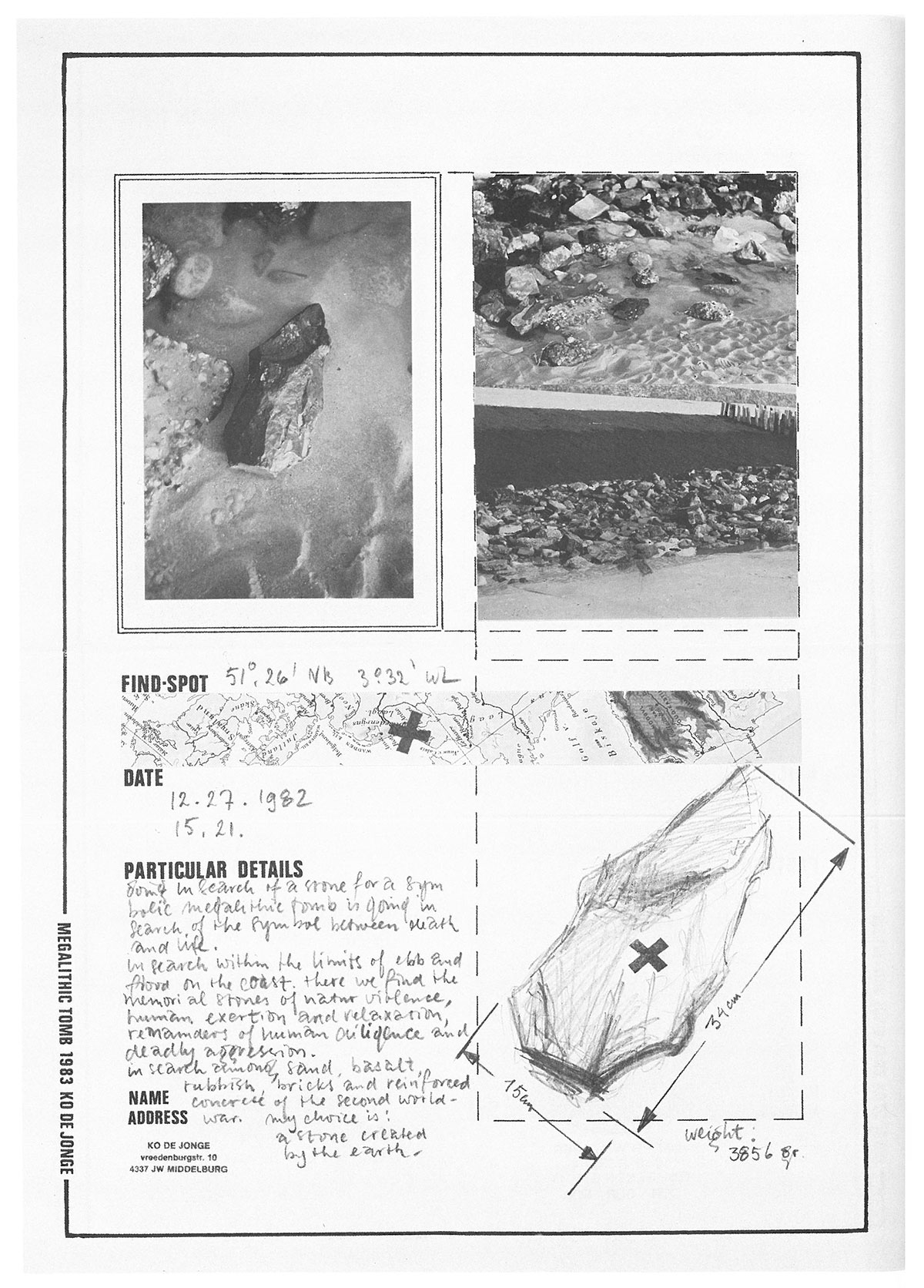
Documentation sheet with measured stone sketch by Ko de Jonge (Middelburg).

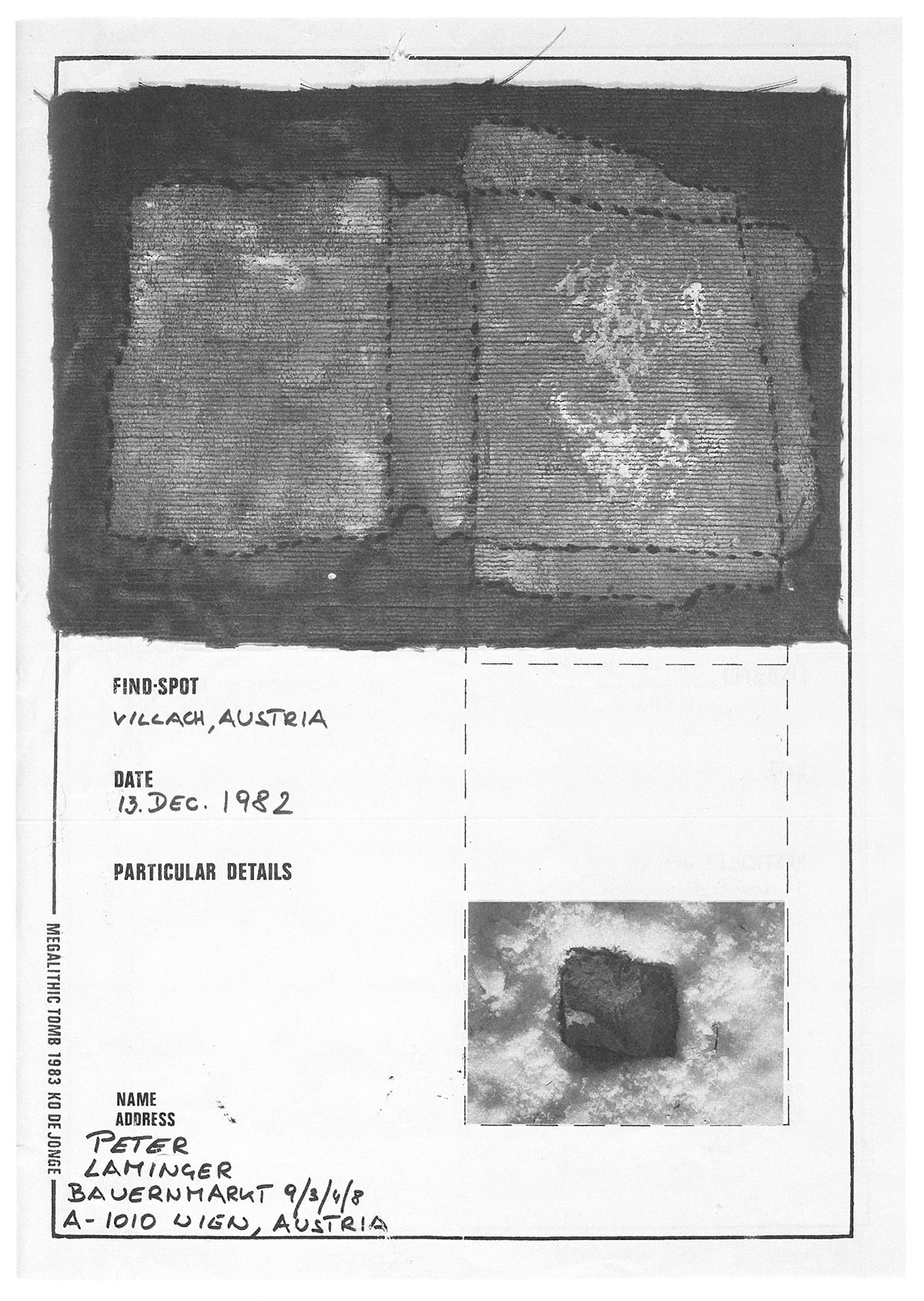
Documentation sheet with fabric/textile piece by Peter Laminger (Vienna, Austria), find-spot Villach.

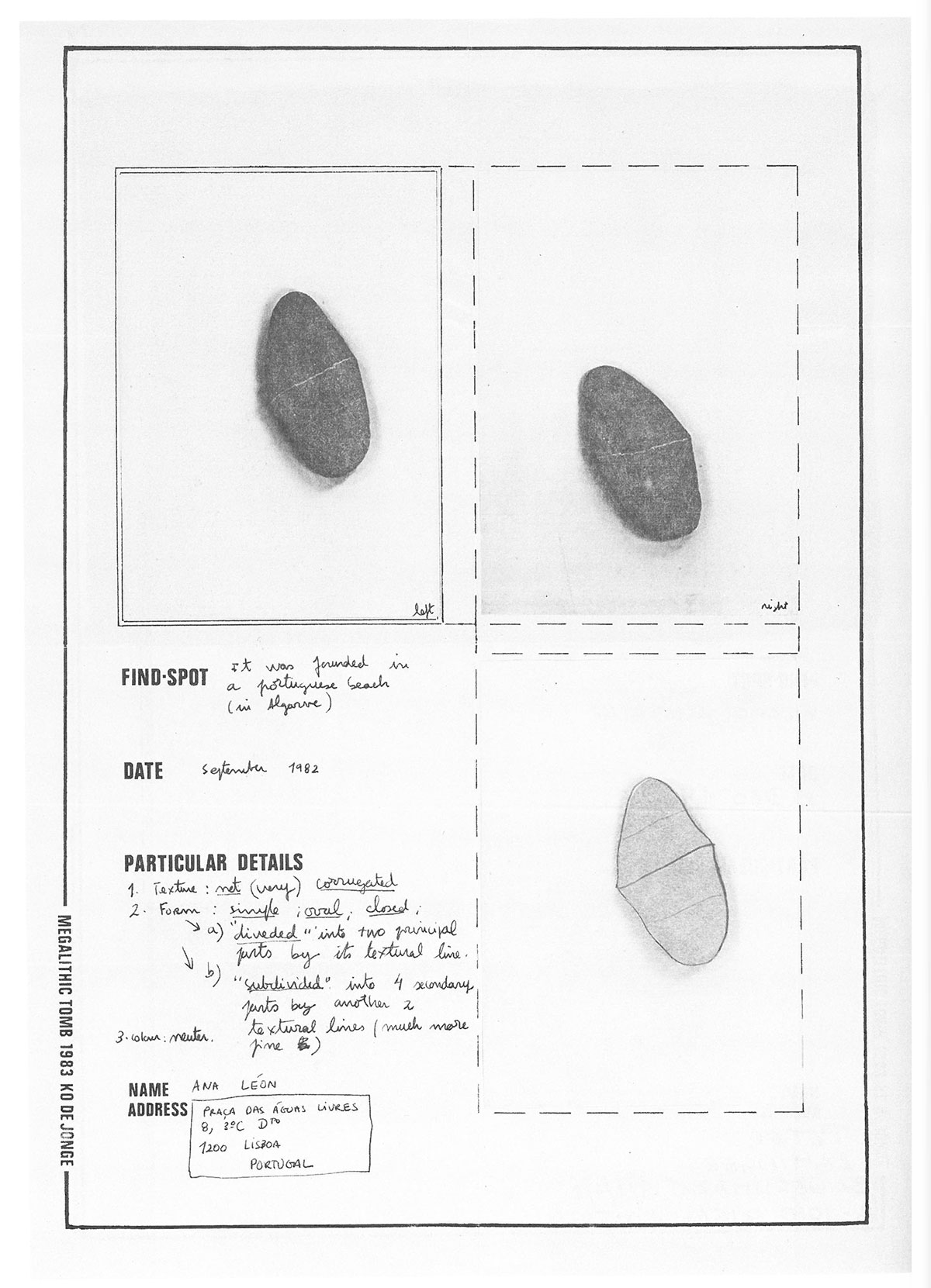
Documentation sheet by Ana Léon (Lisbon, Portugal), stone found on a beach in the Algarve.

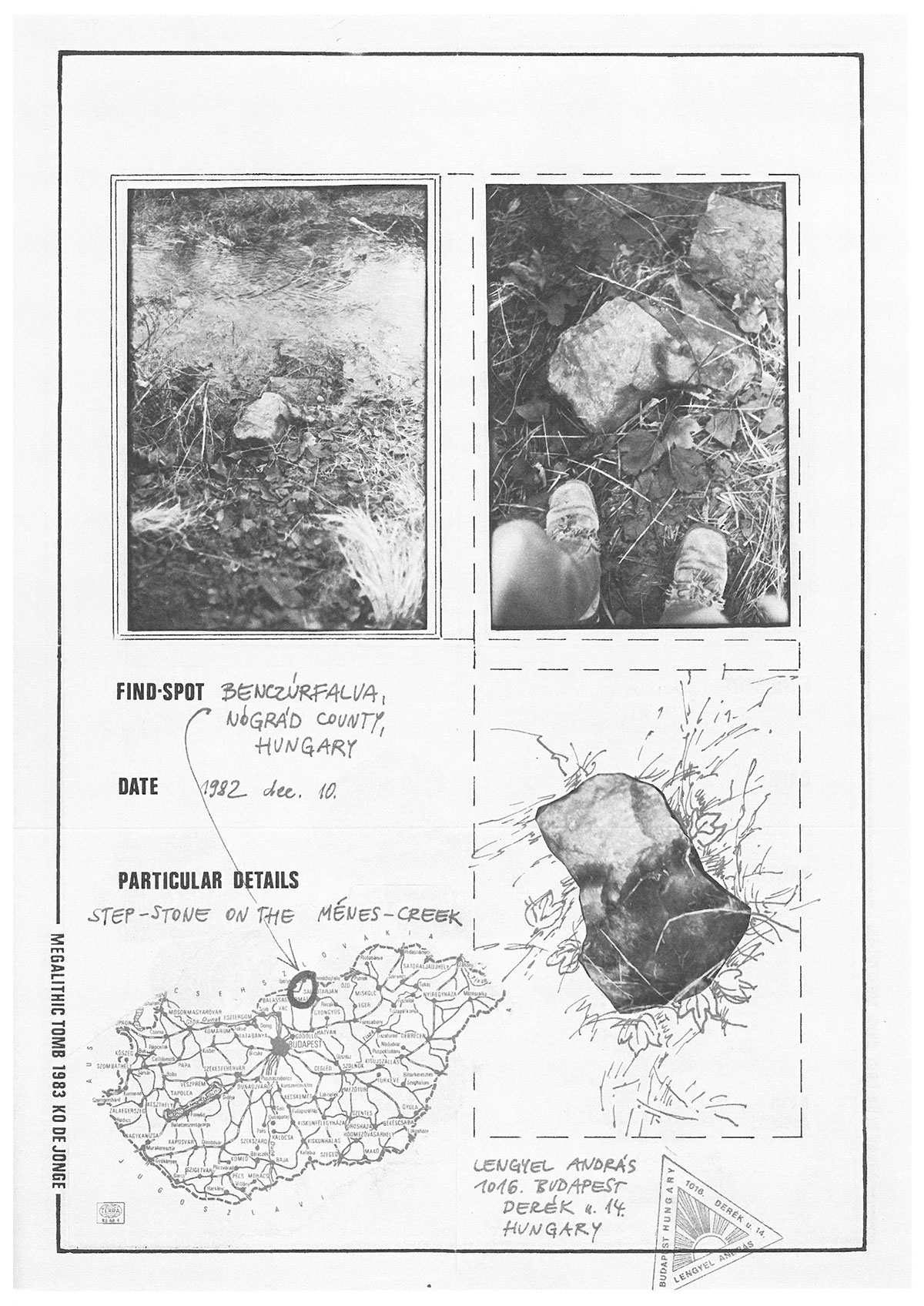
Documentation sheet by András Lengyel (Budapest, Hungary), a step-stone from the Ménes-creek, Benczúrfalva, Nógrád County.

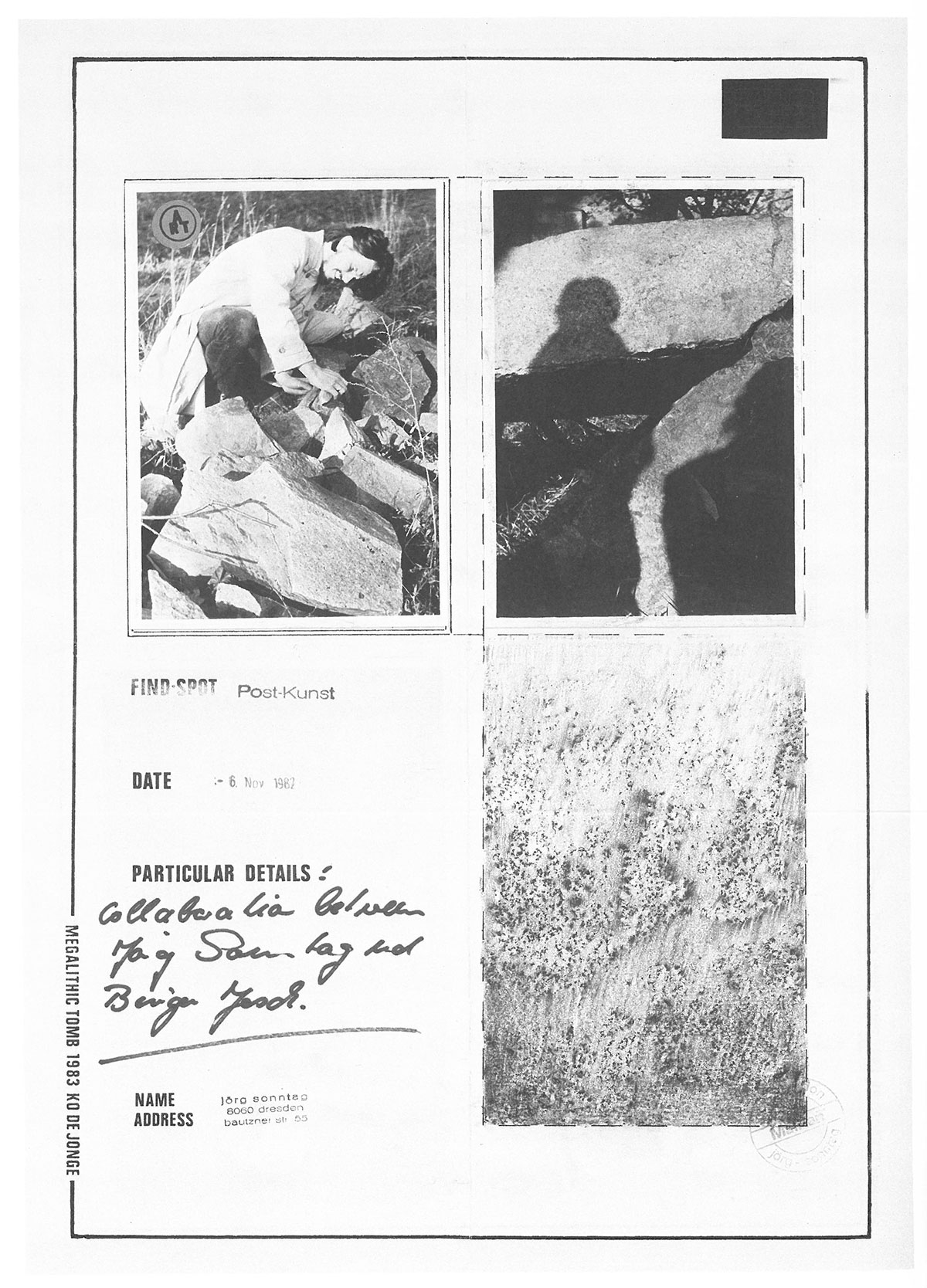
Documentation sheet noting a collaboration between Jörg Sonntag (Dresden) and Birger Jesch, "Post-Kunst."

Text-drawing documentation sheet "FIND-SPOT: MY BRAIN" by Robert Świerkiewicz (Budapest, Hungary).

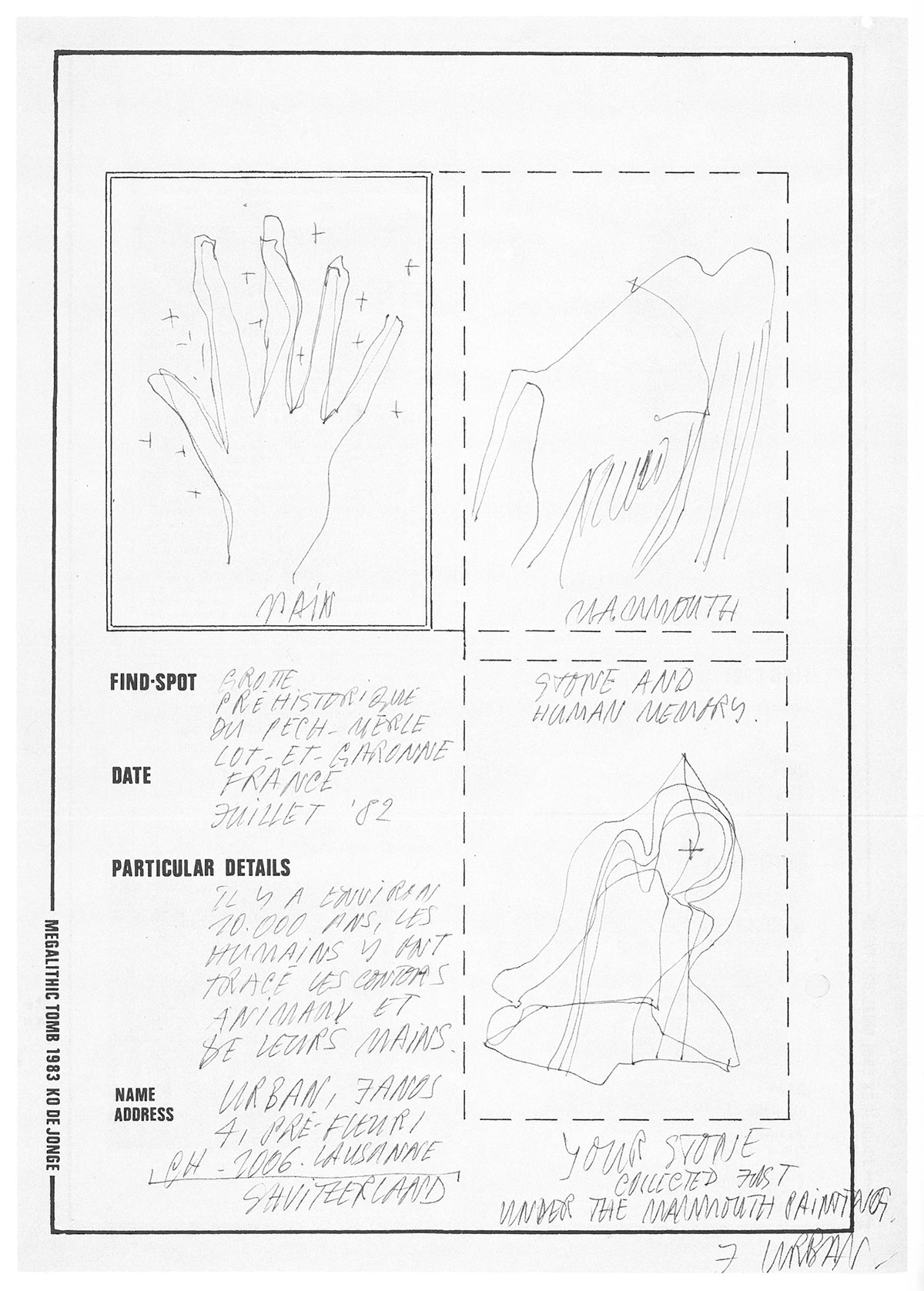
Hand-drawn documentation sheet by János Urban (Lausanne, Switzerland), referencing the Grotte préhistorique du Pech-Merle.

Documentation sheet with photographs of the Nimis driftwood sculpture by Lars Vilks (Arild, Sweden), Kullaberg Nature Reserve.