ILLUSTRATIONS
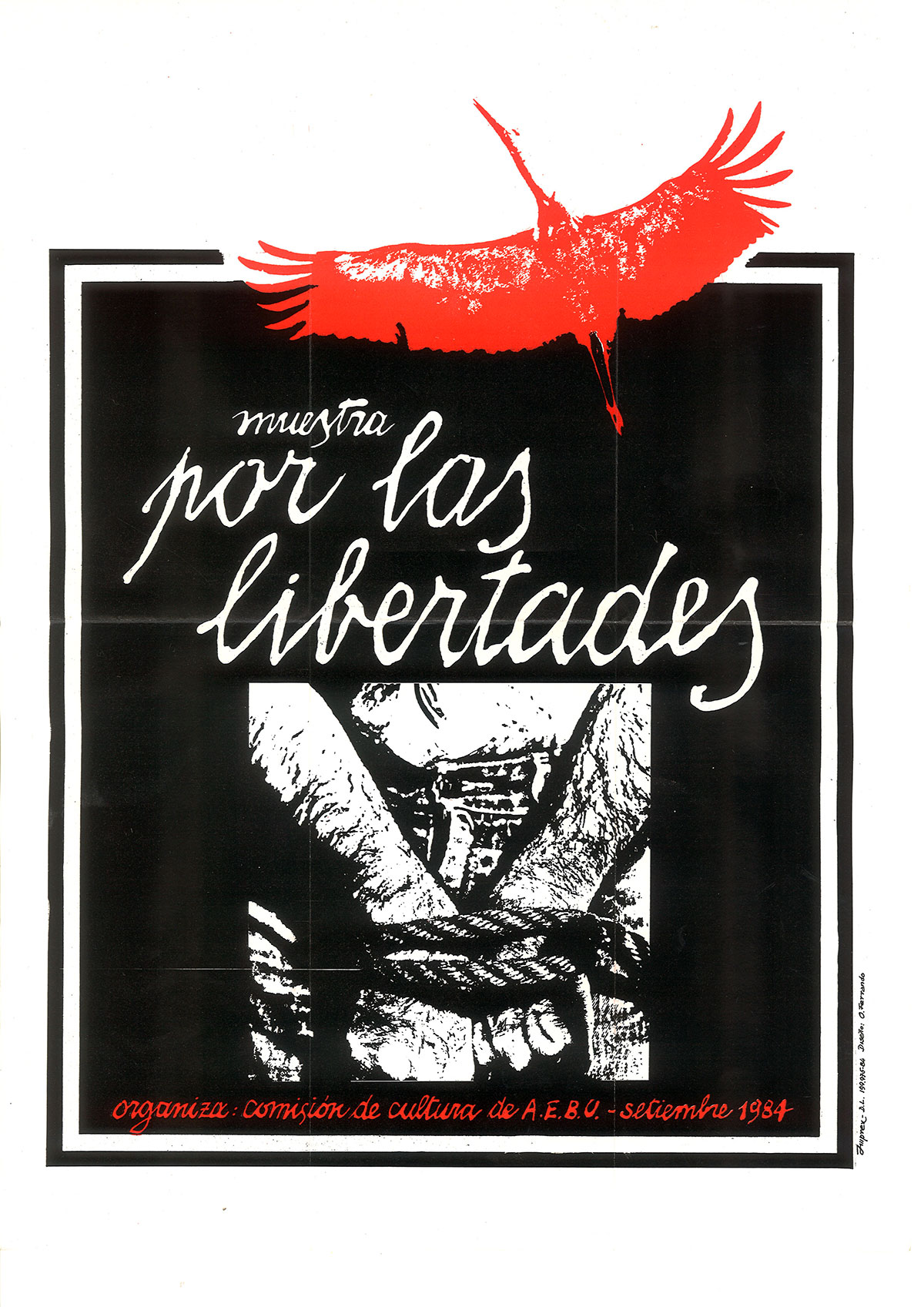
Poster for
Muestra por las libertades,
A.E.B.U., Uruguay, September, 1984 (Designed by Oscar Ferrando)
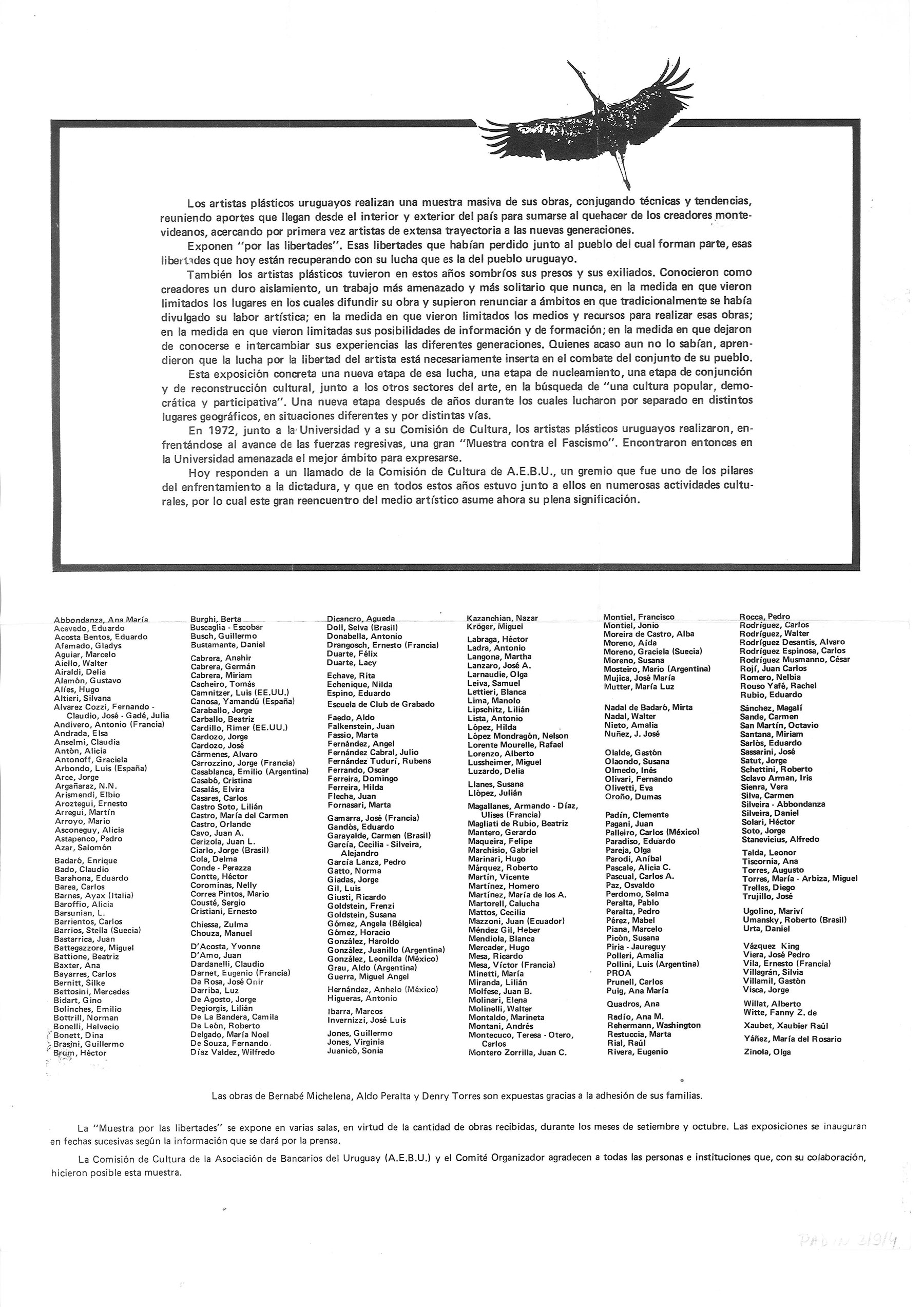
Muestra por las libertades,
A.E.B.U., Uruguay, September, 1984 (Designed by Oscar Ferrando)
This massive exhibition, titled Muestra por las libertades, was organized by the Cultural Commission of the Association of Bank Employees of Uruguay (A.E.B.U.) during a pivotal moment in Uruguay's transition back to democracy. The project served as a powerful act of collective resistance and cultural reconstruction following years of military dictatorship. It brought together 488 artists, including those living in internal exile (within Uruguay) and those in the diaspora.
The exhibition aimed to break the "harsh isolation" and "enforced silence" imposed on the artistic community during the dark years of the regime. It was conceptualized not just as an art show, but as a "meeting point" between creators and the public, emphasizing the "freedom of the artist" as an essential component of the freedom of the people. The documentation notes that the exhibition was spread across various halls due to the overwhelming number of works received. The visual identity of the project, featuring a red bird in flight and bound hands, symbolizes the struggle for liberation and the rebirth of cultural expression.
The relationship between Clemente Padín and the A.E.B.U. Culture Commission represents a vital intersection of avant-garde art and labor activism in Uruguay. During the 1960s and 70s, the bank employees' union (A.E.B.U.) acted as a strategic sanctuary for dissident intellectuals, providing a platform for Padín’s radical experiments in visual poetry and Mail Art.
Padín utilized the commission’s infrastructure to bypass traditional museum censorship, organizing exhibitions that blended aesthetic innovation with anti-dictatorial messages. Even during his imprisonment by the military regime in 1977, the networks fostered within these union-backed cultural spaces were instrumental in launching international solidarity campaigns for his release. Ultimately, their collaboration transformed the union from a mere labor office into a crucial hub for the "New Poetry" movement and Latin American resistance art.
The exhibition aimed to break the "harsh isolation" and "enforced silence" imposed on the artistic community during the dark years of the regime. It was conceptualized not just as an art show, but as a "meeting point" between creators and the public, emphasizing the "freedom of the artist" as an essential component of the freedom of the people. The documentation notes that the exhibition was spread across various halls due to the overwhelming number of works received. The visual identity of the project, featuring a red bird in flight and bound hands, symbolizes the struggle for liberation and the rebirth of cultural expression.
The relationship between Clemente Padín and the A.E.B.U. Culture Commission represents a vital intersection of avant-garde art and labor activism in Uruguay. During the 1960s and 70s, the bank employees' union (A.E.B.U.) acted as a strategic sanctuary for dissident intellectuals, providing a platform for Padín’s radical experiments in visual poetry and Mail Art.
Padín utilized the commission’s infrastructure to bypass traditional museum censorship, organizing exhibitions that blended aesthetic innovation with anti-dictatorial messages. Even during his imprisonment by the military regime in 1977, the networks fostered within these union-backed cultural spaces were instrumental in launching international solidarity campaigns for his release. Ultimately, their collaboration transformed the union from a mere labor office into a crucial hub for the "New Poetry" movement and Latin American resistance art.