Mail Art Chro No Logy

ILLUSTRATIONS
Pages from the catalog
Thank you, Postman,
Postal Museum, Helsinki, Finland, 1996.

Thank you, Postman was a 1996 exhibition at the Postal Museum in Helsinki centered on Alain Baczynsky's mail-related art. In the catalog introduction, Postal Museum director Jari Karhu explains that a friend had brought Baczynsky's work to his attention and thanks the artist for allowing the museum to bring his personal artistic message to Finland and Helsinki. Karhu presents the exhibition as a celebration of friendship and as an acknowledgment of letter carriers, mail sorters, and postmen, and dedicates it to the memory of Elis Sella.

The catalog contains an extensive historical and personal account of Mail Art. The text surveys the development of Mail Art internationally, its Finnish history, Takalo-Eskola's network contacts, and the non-juried, decentralized principles he associated with the medium.

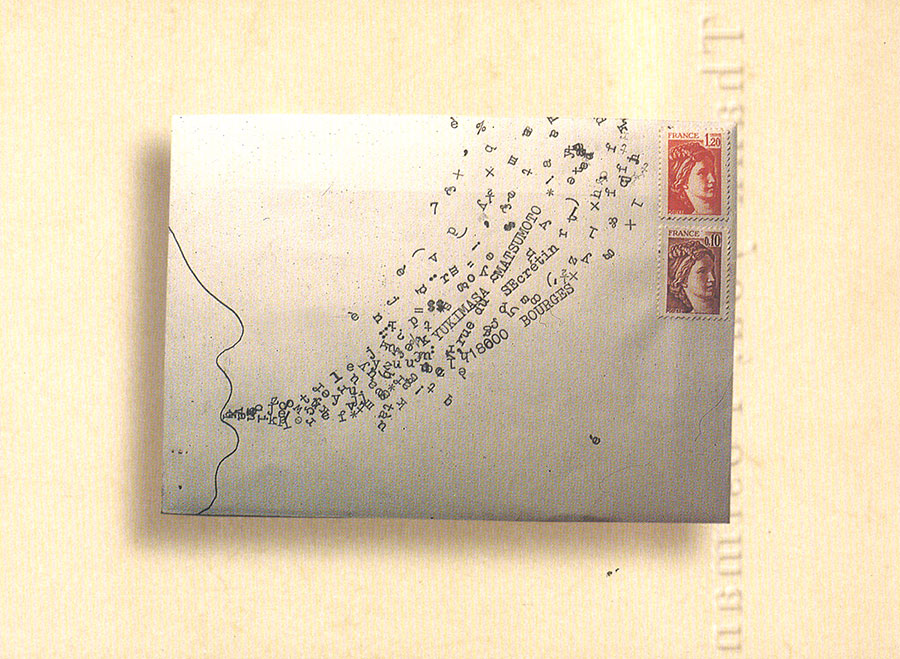
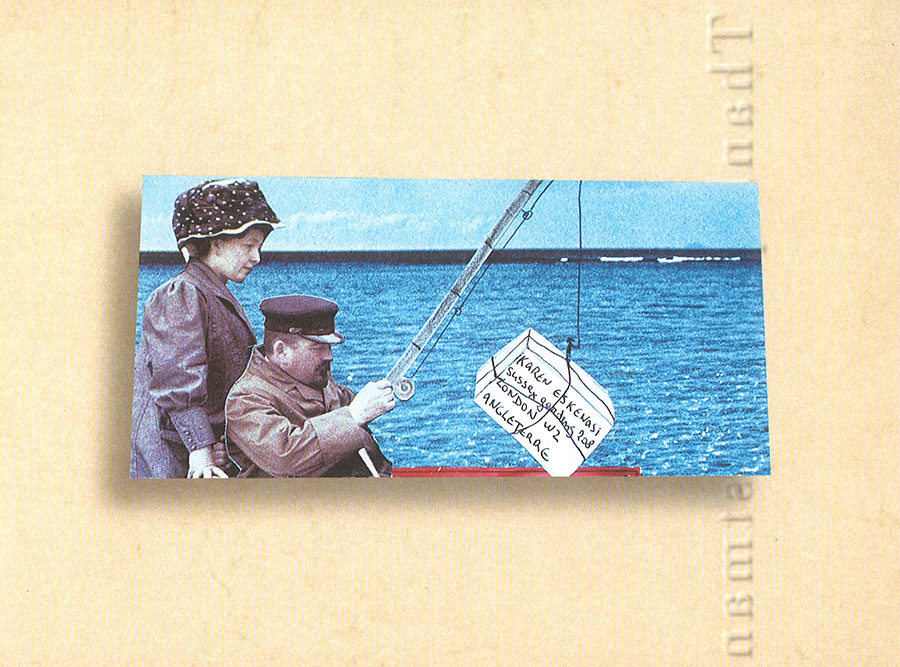
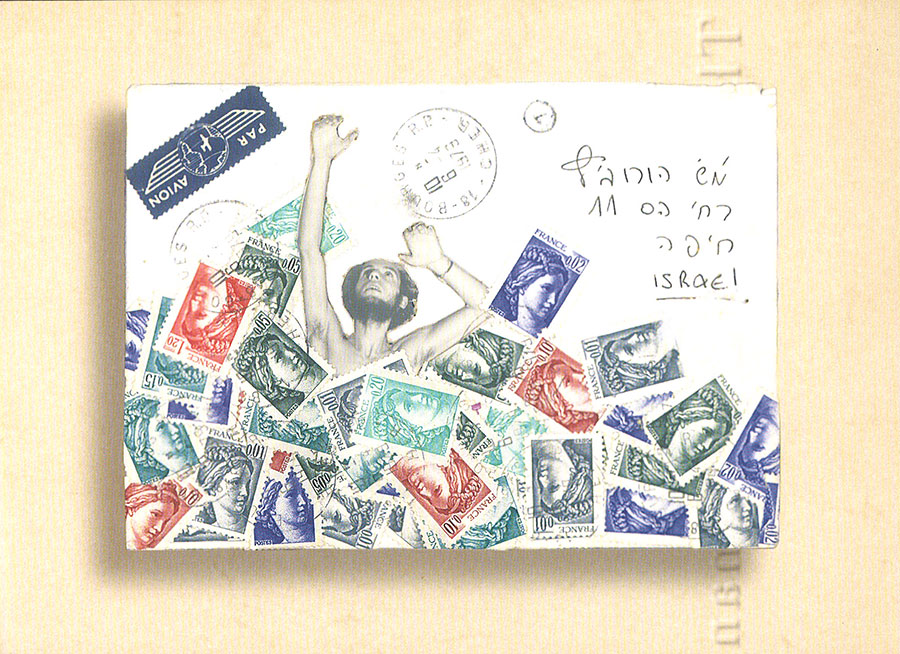
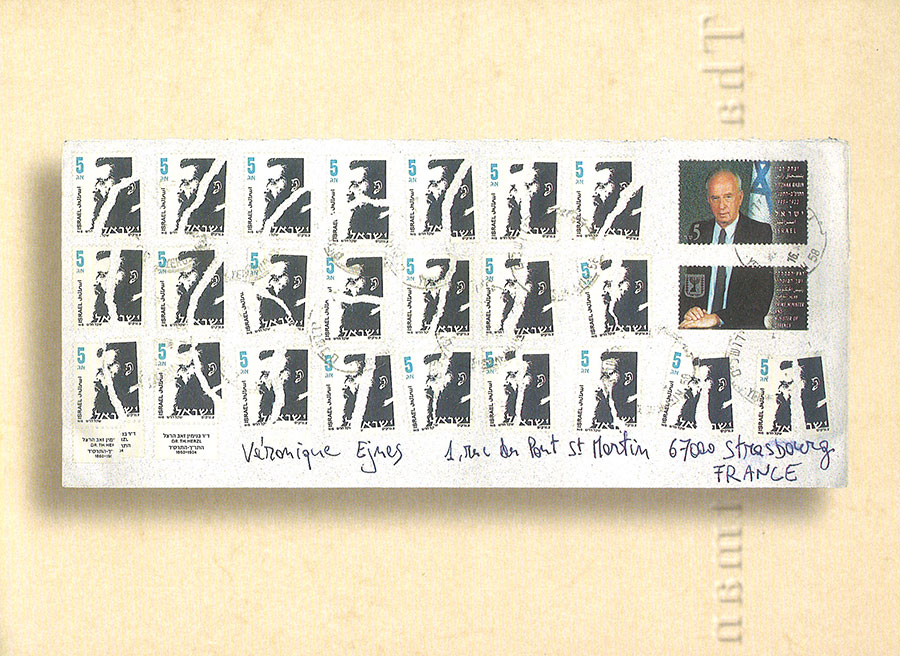
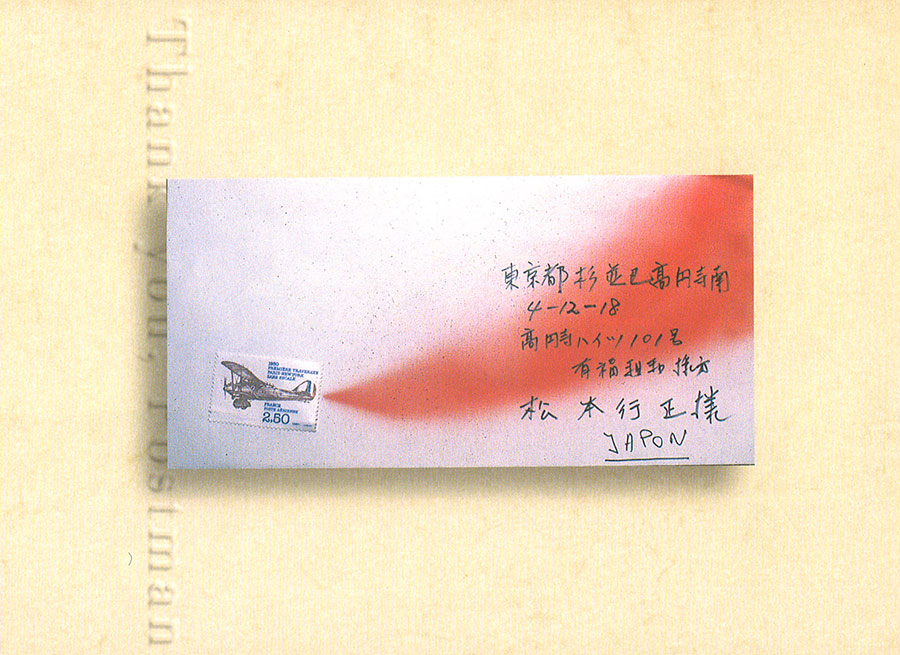
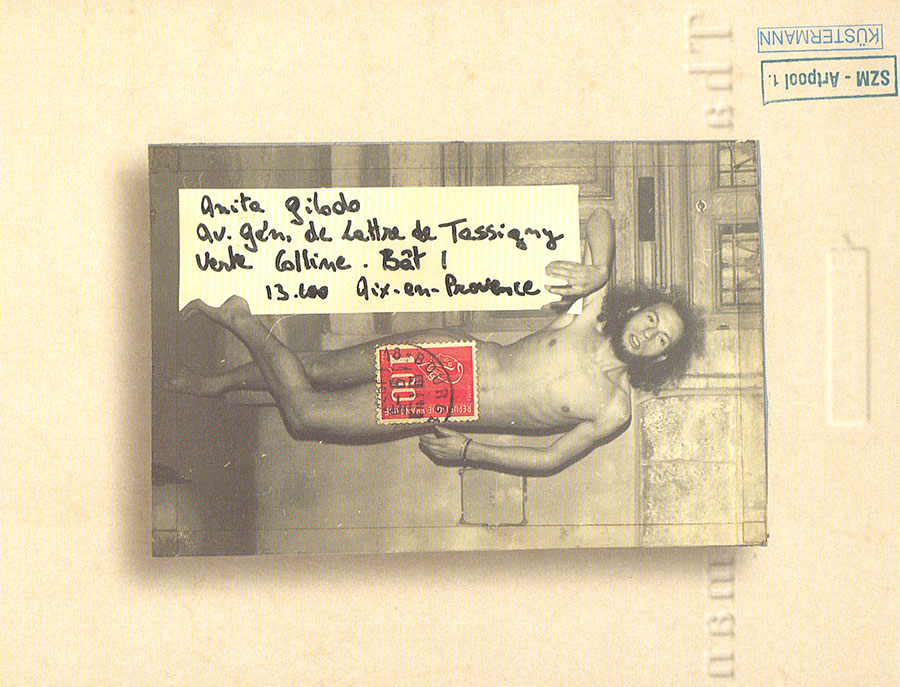
The later illustrated pages reproduce envelopes, postcards, postal collages, and other mail-art material. Most of these reproductions could be attributed to Baczynsky because they appear in the section associated with his work.

A later interview with Alain Baczynsky provides compatible, though not independently project-identifying, context: he recalled recovering letters he had sent to friends and subsequently being contacted by a curator in Finland who wanted to present the material in a major Helsinki museum. The interview does not itself give the title Thank you, Postman, so it is used only as supplementary evidence. Centre Pompidou records Baczynsky as a Belgian-Israeli photographer born in Brussels in 1953.
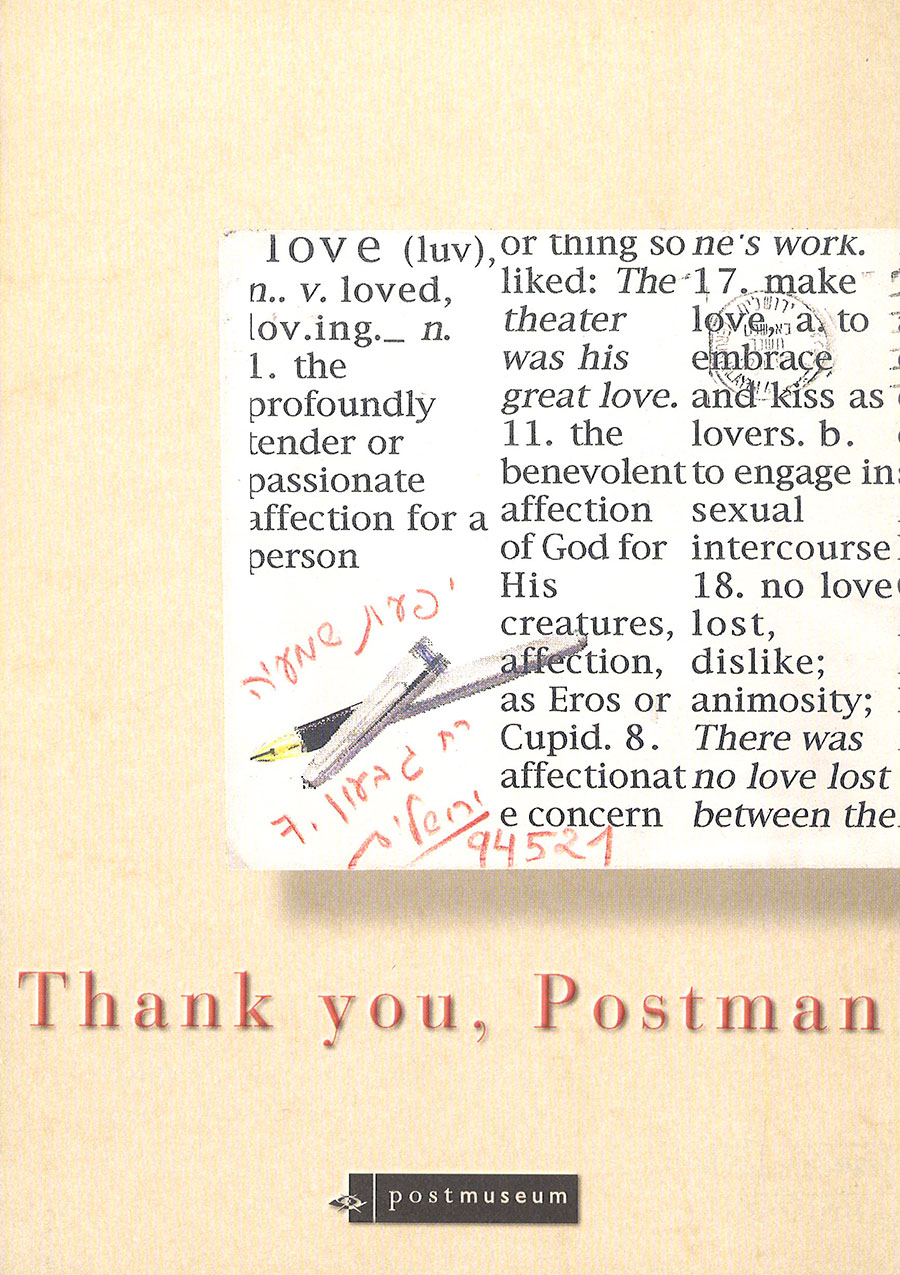
Cover


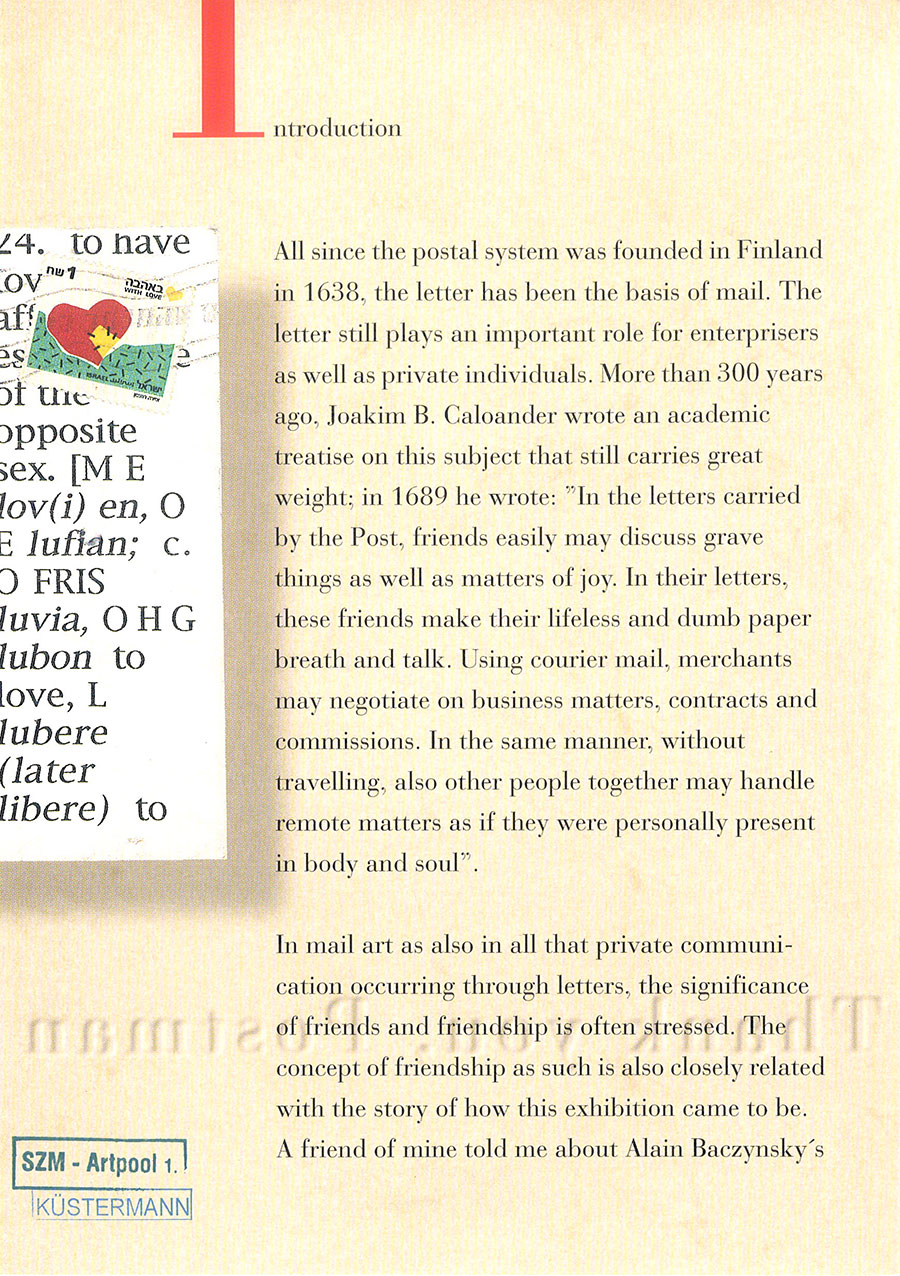
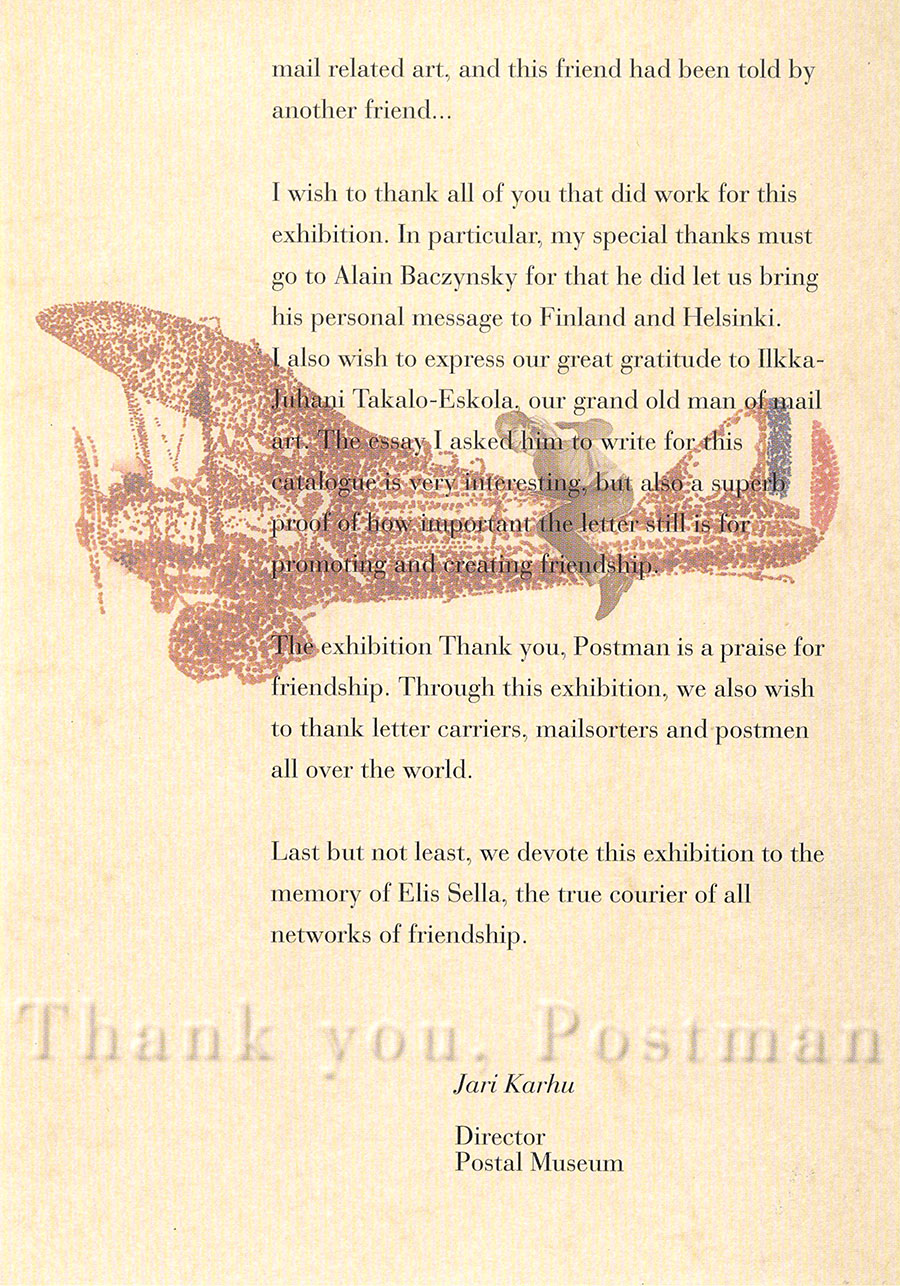
Introduction.
Two-page introduction signed by Jari Karhu, Director, Postal Museum. Karhu describes the genesis and purpose of Thank you, Postman, acknowledges Alain Baczynsky, states that he commissioned the catalog essay from Ilkka-Juhani Takalo-Eskola, and dedicates the exhibition to the memory of Elis Sella.


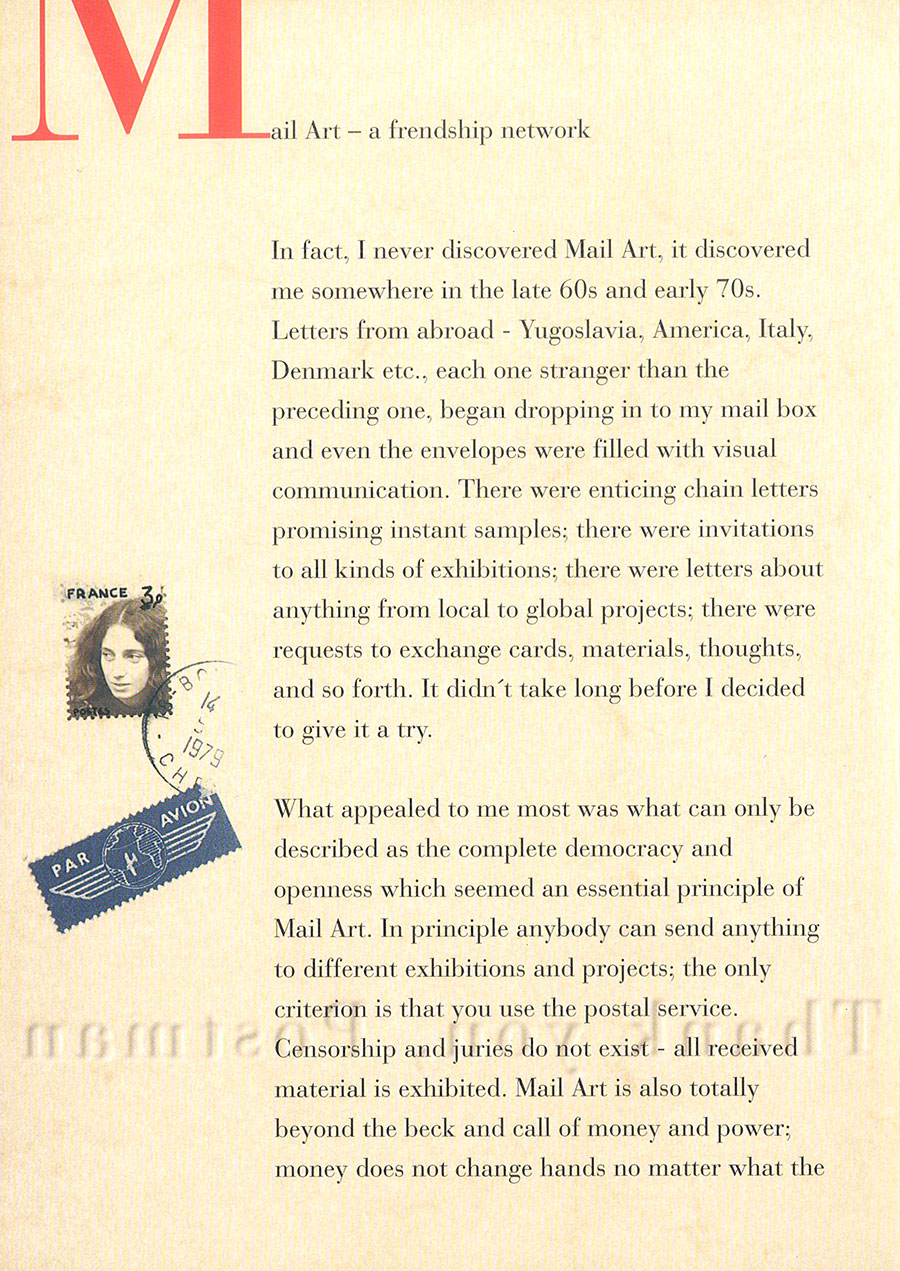
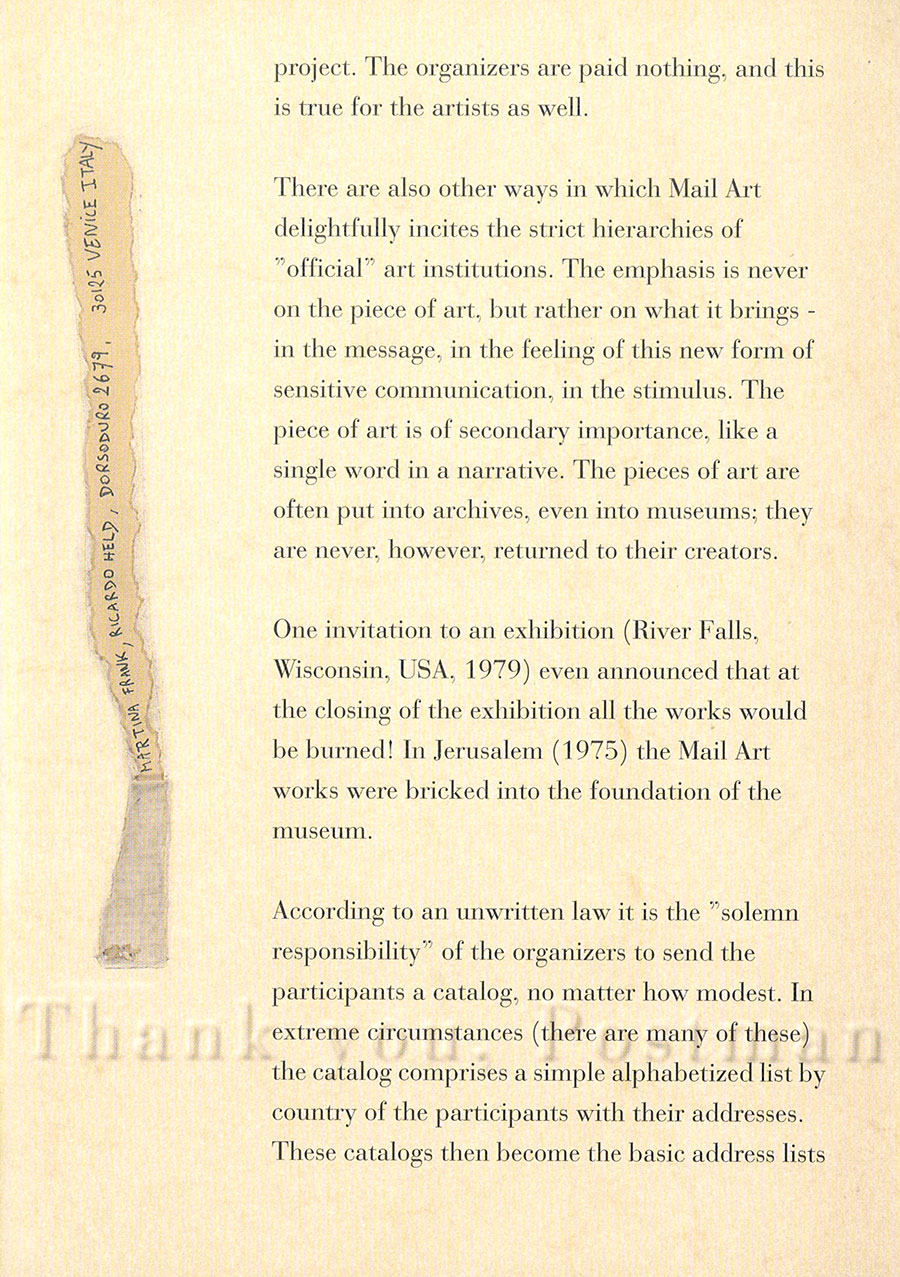
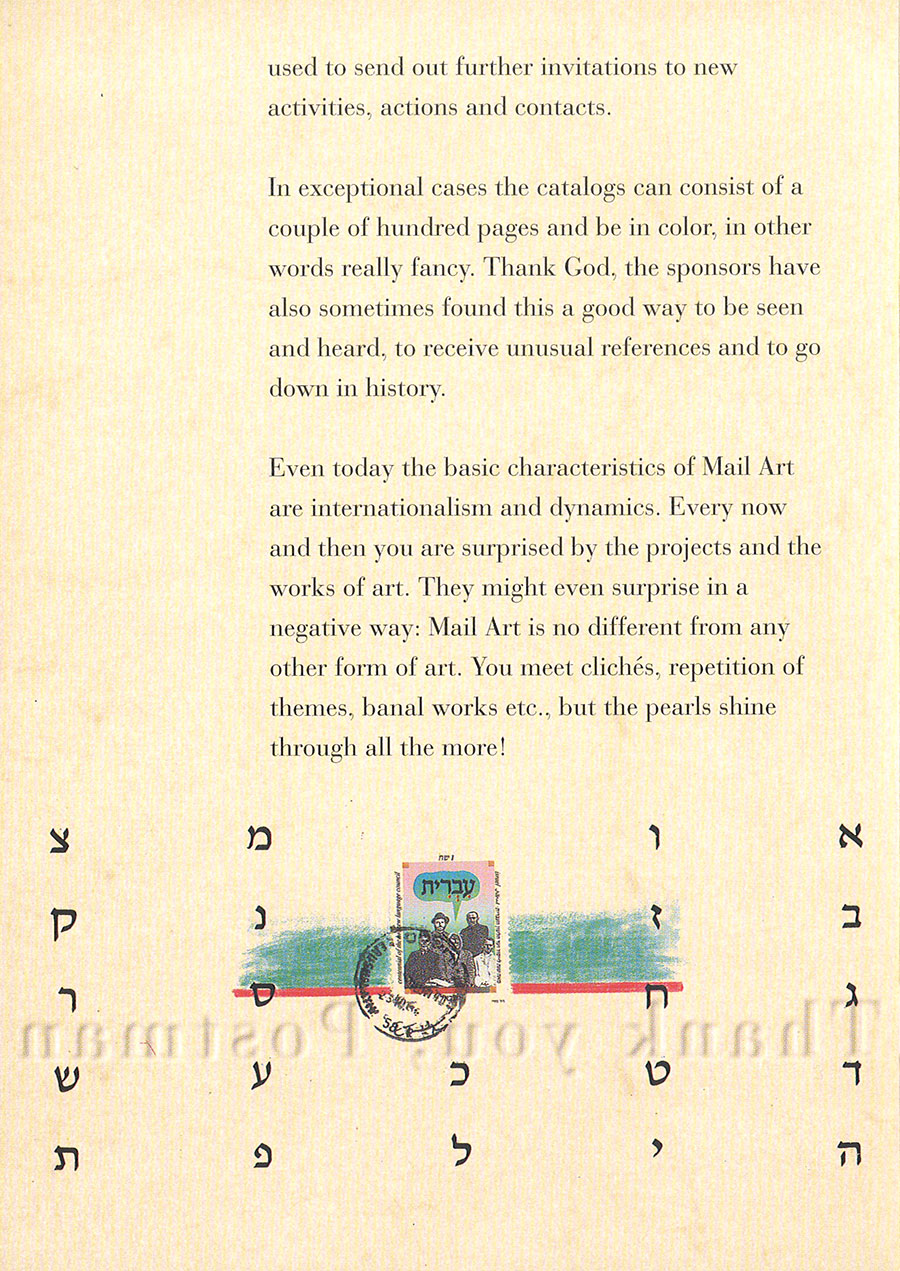
Catalog essay, “Mail Art – a friendship network”.
Opening spread of the catalog essay on Mail Art as an international friendship network. The text discusses the author's early correspondence, the open and non-juried character of Mail Art, organizers' responsibilities, and examples including a 1979 project in River Falls, Wisconsin, and a 1975 project in Jerusalem. Postal and typographic elements accompany the text.


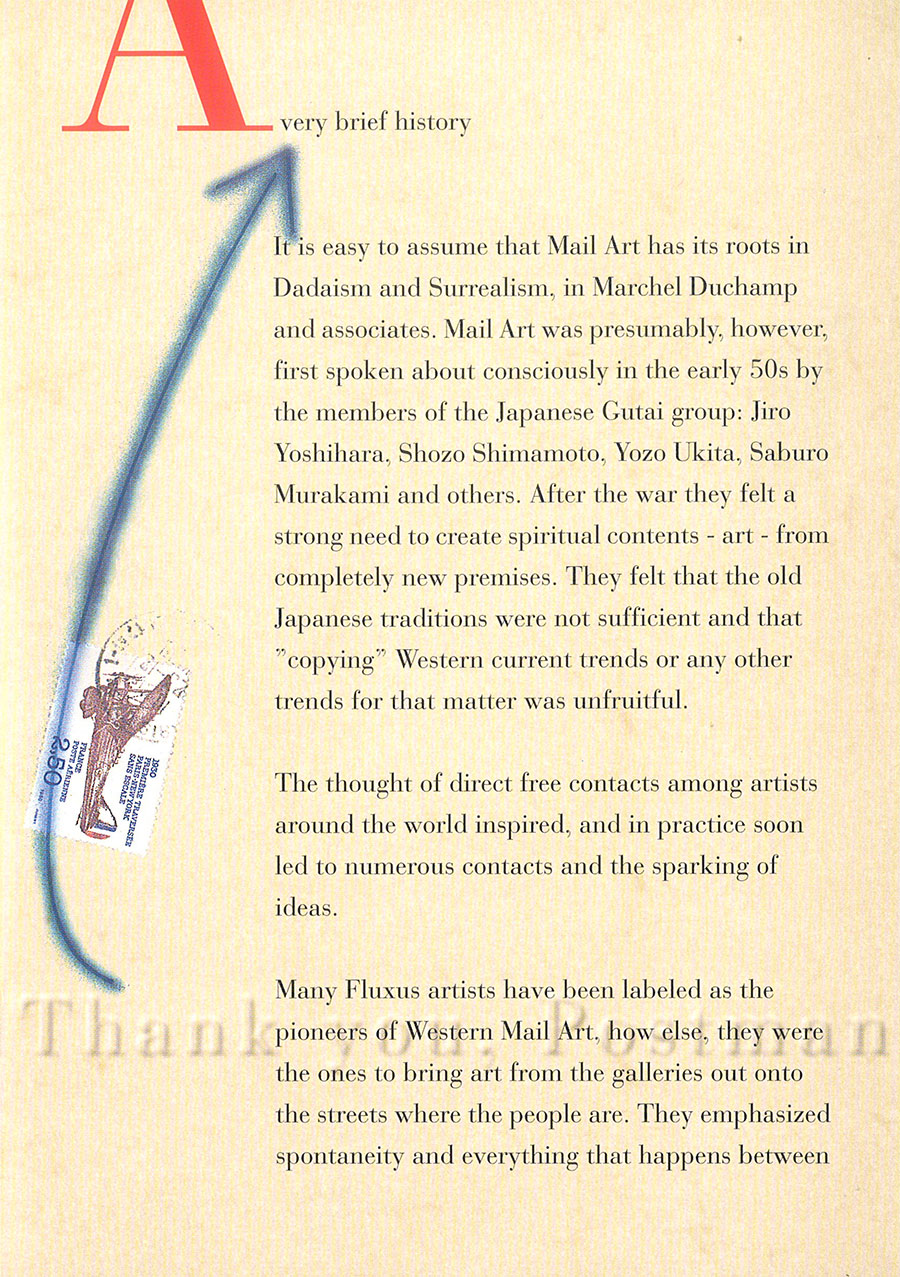
Catalog essay, “A very brief history”.
Discussing Dada, Surrealism, Marcel Duchamp, Gutai, and Fluxus. Visible historical names include Jiro Yoshihara, Shozo Shimamoto, Yozo Ukita, and Saburo Murakami, Allan Kaprow, Al Hansen, George Brecht, Giuseppe Chiari, Robert Whitman, Ray Johnson, James Dine, Robert Filliou, Terry Fox, Ben Vautier, Wolf Vostell, Arthur Köpcke, George Maciunas, Dick Higgins, and Yoko Ono. The page also discusses postal ephemera and the continuing role of Mail Art alongside newer communications technologies.


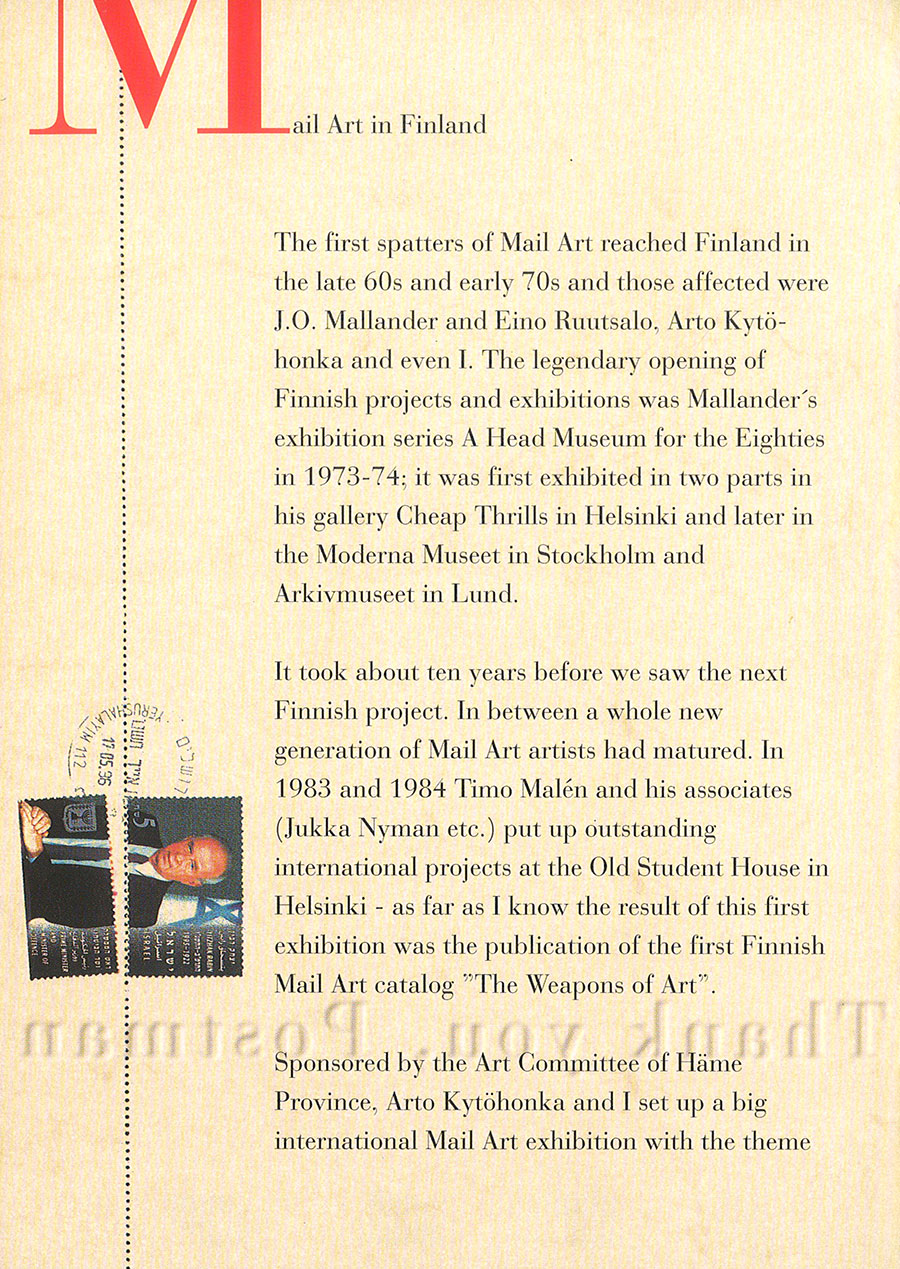
Catalog essay, “Mail Art in Finland”
Section on the history of Mail Art in Finland. It names J.O. Mallander, Eino Ruutsalo, Arto Kytöhonka, Timo Malén, Jukka Nyman, Kimmo Framelius, Reima Mäkinen, Kaisu Koivisto, and Jukka Lehmus, and refers to projects including Mallander's A Head Museum for the Eighties, the catalog The Weapons of Art, an international optimism-themed project realized in Tampere and Jyväskylä, and Postipamaus at the Helsinki Museum for Contemporary Art, 19 November 1992–27 January 1993 - see a related exhibition's documentation. These references form historical context rather than a participant roster for the present exhibition.


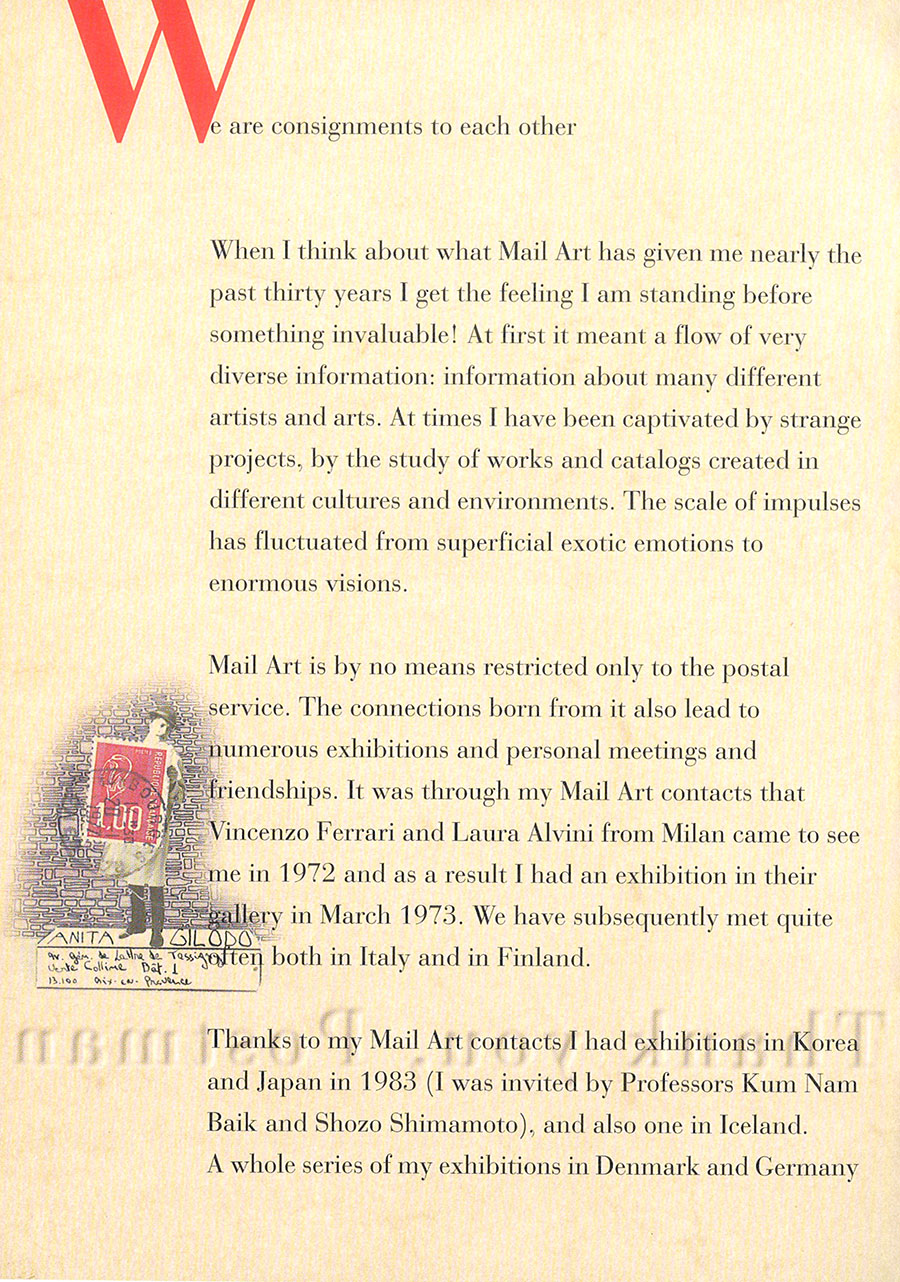
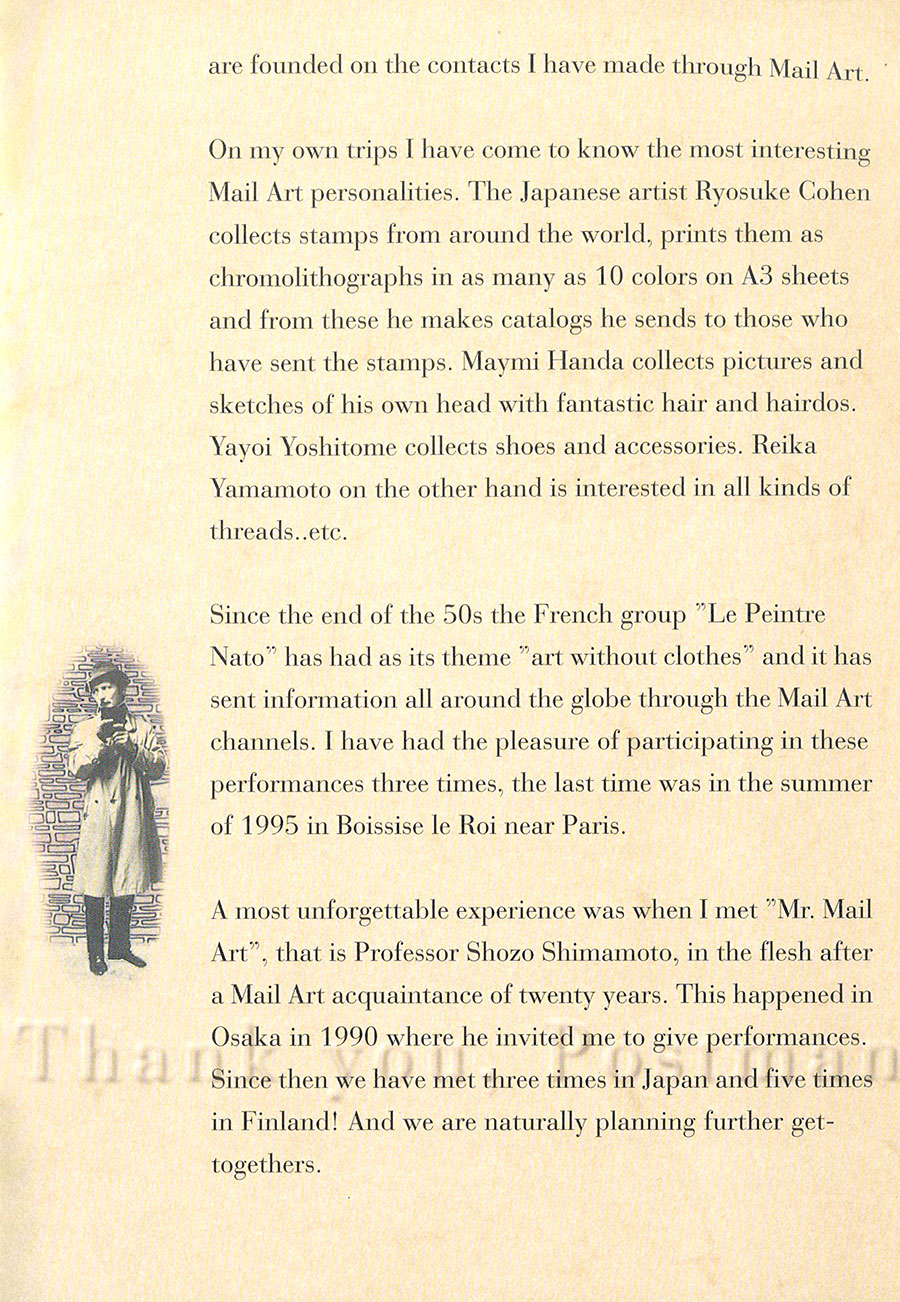
Catalog essay, “We are consignments to each other”.
Personal account of the author's international Mail Art contacts. Visible names include Vincenzo Ferrari, Laura Alvini, Kum Nam Baik, Shozo Shimamoto, Ryosuke Cohen, Maymi Handa, Yayoi Yoshitome, Reika Yamamoto, and the French group Le Peintre Nato.


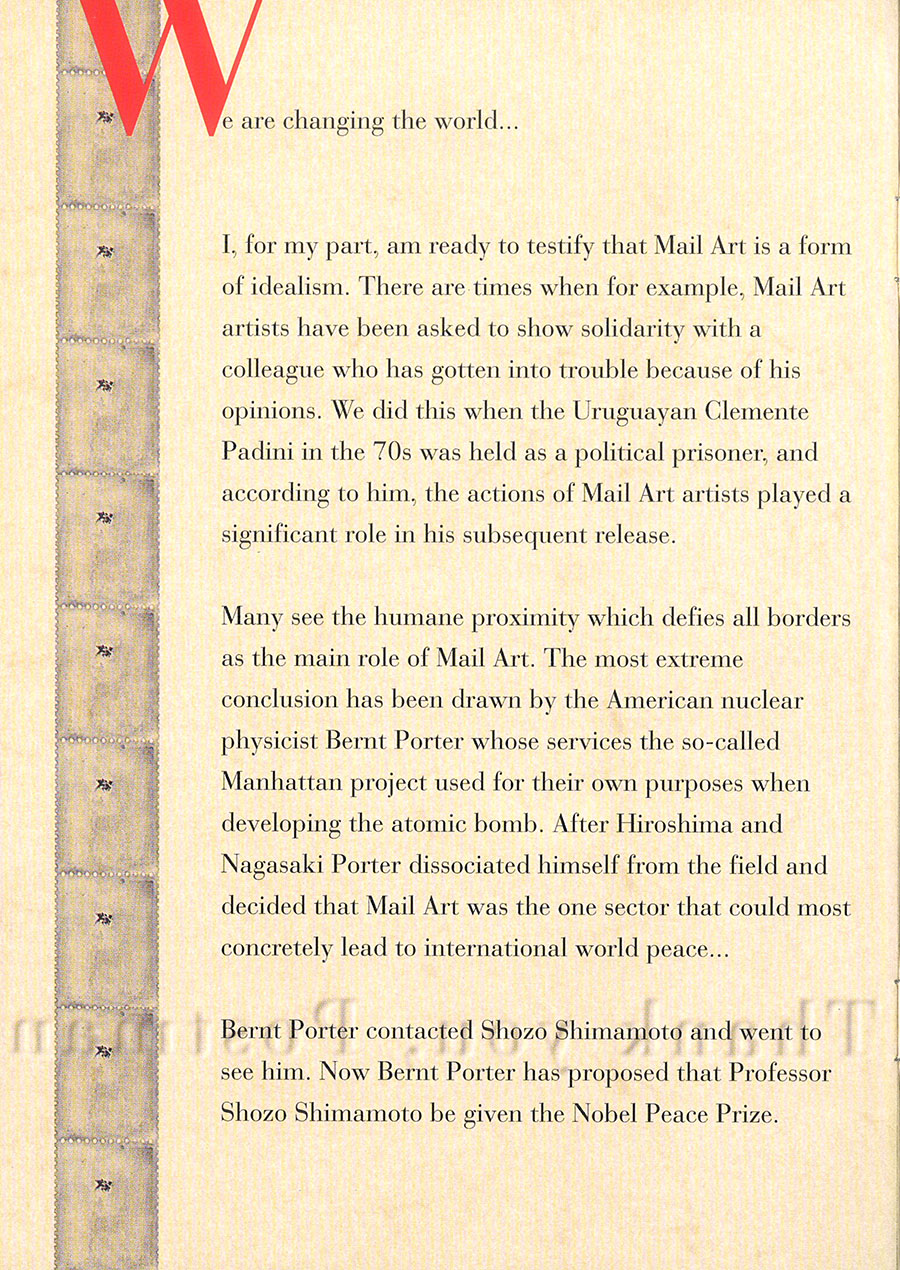
Catalog essay, “We are changing the world...”
Discussing network solidarity and the diversity of Mail Art. It refers to Clemente Padin, Bernt Porter, and Shozo Shimamoto.


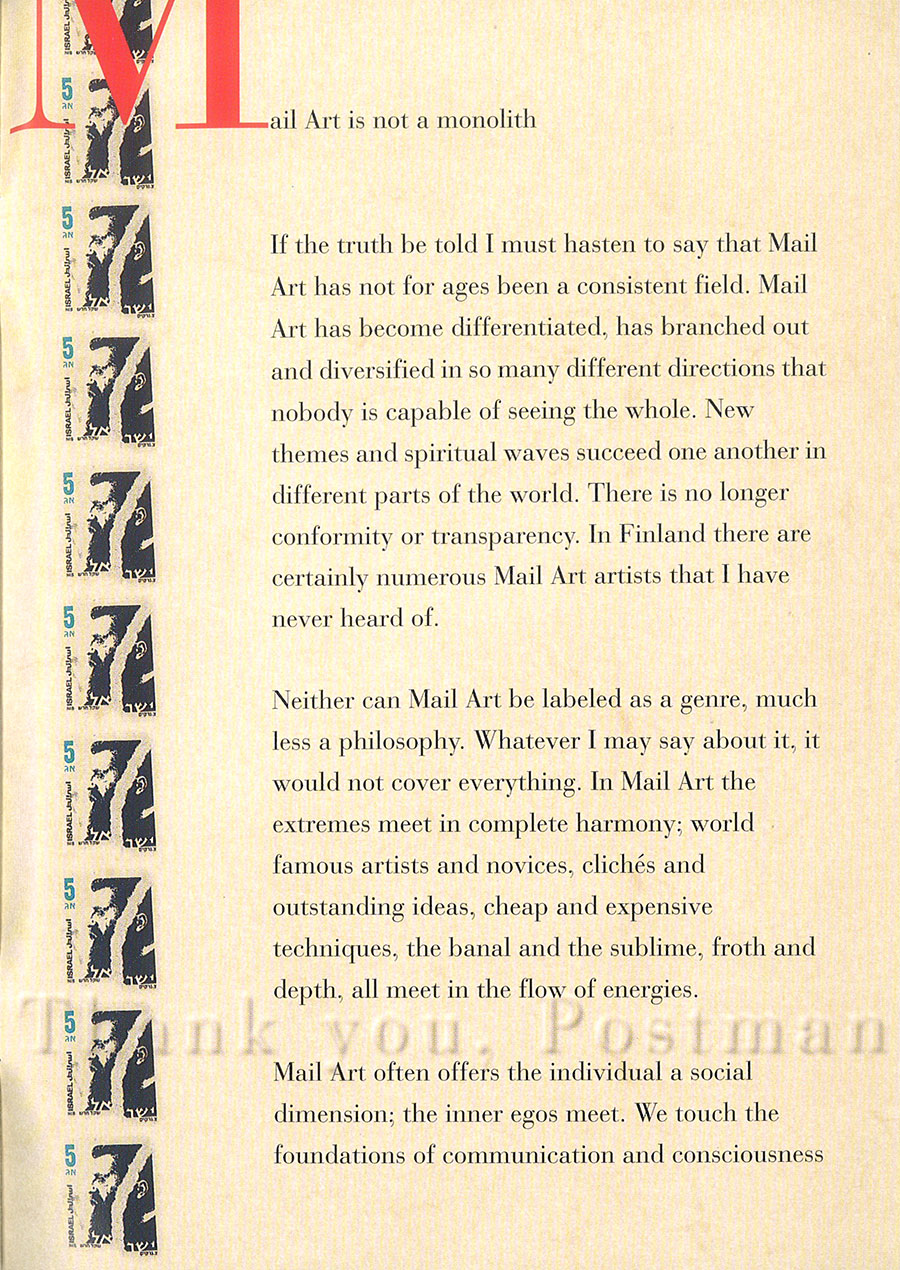
Catalog essay, “Mail Art is not a monolith”
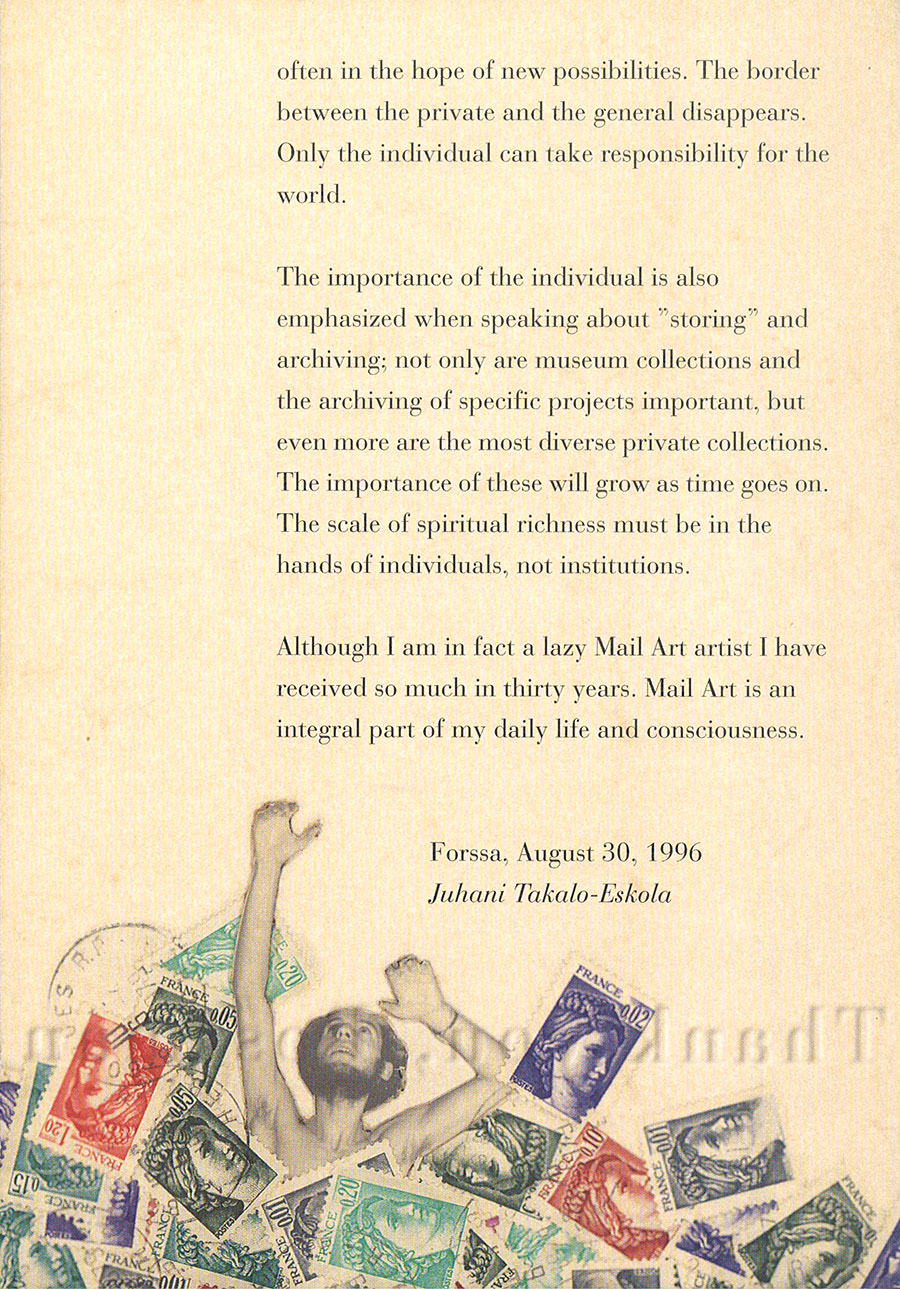
Discussing private collections, archiving, and Mail Art as part of everyday life. The text is signed “Juhani Takalo-Eskola” and dated “Forssa, August 30, 1996.” A colorful postal collage appears below the text.

Reproduced mail-art envelopes

fel ↑ top