HISTORY/REALITY #4: From The Garden of Communication
to the Dark Forest of the Internet:
Archiving networked art in the age of automation
talks, performance, and platform launch
Date: Thursday, 21 May 2026
Time: 16.00-18.00 pm (CET)
Artpool Art Research Center
H-1135 Budapest, Szabolcs u. 33., building D
(Hybrid event held in English)
For online participation booking is essential. Free tickets via Eventbrite.
(Online participants will receive the link to join the event as the date approaches)
Presented in association with archivuminternetwork: 30 Years of artpool.hu, this event takes two contrasting visions of the internet as a starting point to explore a range of approaches by artists, archivists, curators, and historians. In 1998, Anna Balint envisioned the web as a 'garden of communication', an open, collaborative space shaped by human interaction. Nearly three decades later, Bogna Konior reimagines it as a 'dark forest, ' characterised by opacity, automation, and increasingly fraught navigation and shaped by “a cosmic war machine, teeming with existential tension, nascent AI cults, and deceptive superintelligences.”
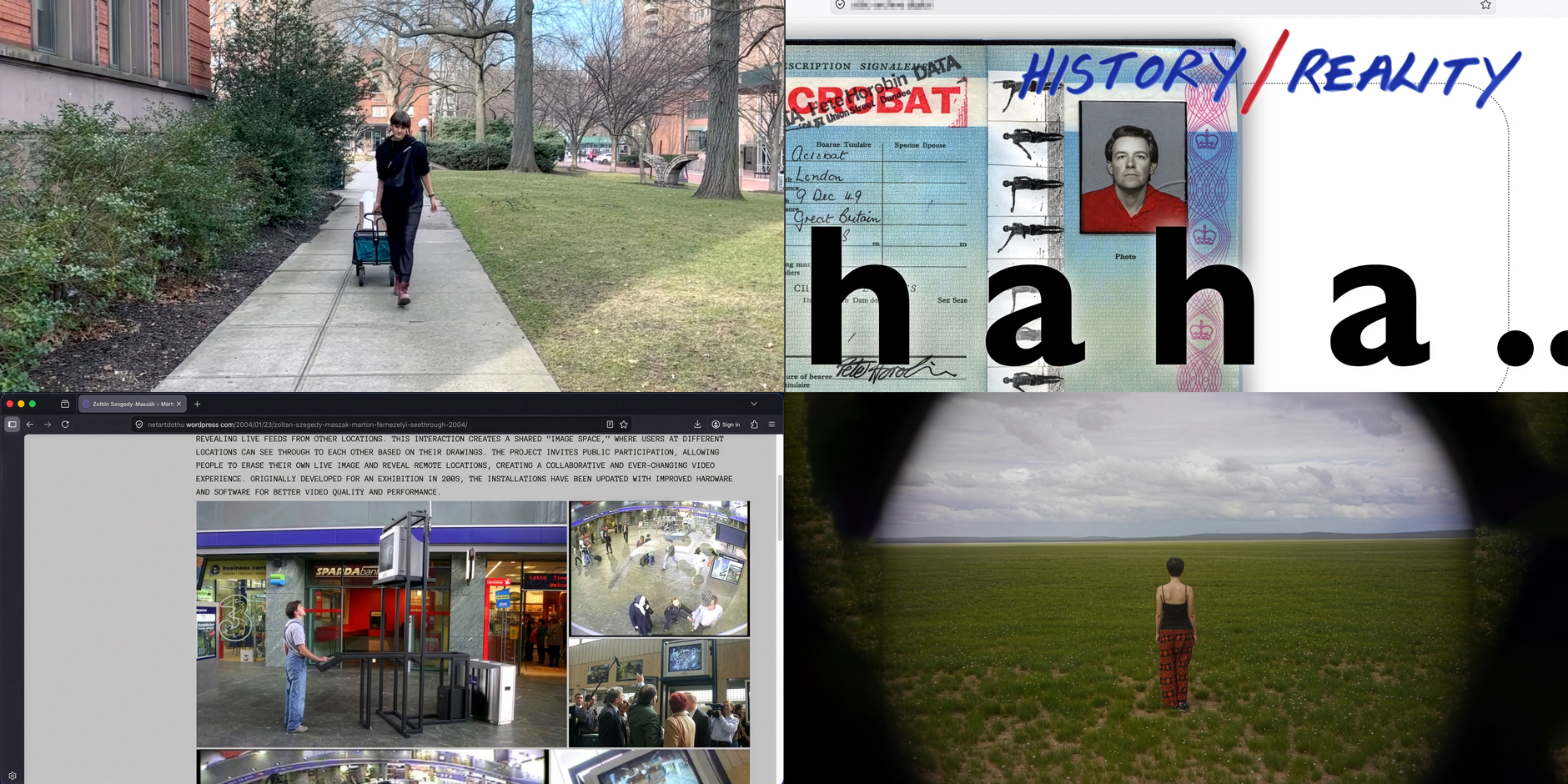
We'll be guided by presentations by Elly Clarke [Dragging the Archive] and Flóra Barkóczi [netartdothu], as well as a new live performance by Viktória Monhor. Additionally, as the final event in the History/Reality series, Judit Bodor & Roddy Hunter will launch The Digital Attic Archive, following a three-year project reconnecting the internationally dispersed artist's archive and self-historicisation project initiated by artist Pete Horobin in Dundee, Scotland, in 1980. The series title derives from Pete Horobin’s 1970s performance, which explores how artists’ archives–particularly those emerging from time-based and networked practices–survive in post-digital contexts.
The event will be of particular interest to artists, curators, and art historians working with performance and networked art, as well as to those interested in digital humanities more broadly. It will also appeal to archivists, librarians, and cultural heritage professionals, as well as independent cultural workers interested in self-organisation and community-driven platform-building.
Program schedule:
16:00 – 16:10 Roddy Hunter: Introduction
16:10-16:30 Flóra Barkóczi: netartdothu as an Experimental Archive for Hungarian Net Art
Netartdothu is an online platform dedicated to archiving Hungarian net art from the 1990s, developed as part of Flóra Barkóczi’s doctoral research at the Film, Media, and Contemporary Culture program at ELTE (Eötvös Loránd University). The presentation focuses on how the platform functions and the challenges of archiving early web-based art. As both a research tool and an open-access resource, netartdothu uses a media-archaeological approach to reconstruct and preserve obsolete works while addressing broader issues of born-digital heritage and early internet culture.
16:30-16:50 Elly Clarke: Revisiting Reiterating Returning to Franklin Furnace Archive 25 years later [1998 / 2019 / 2023]
In 2023, twenty five years after their first encounter as an intern, Elly Clarke re-visited the Franklin Furnace Archive through Dragging the Archive, an online/offline exhibition at the Pratt Institute, New York. The exhibition considered the 'drag of the archive' as the burden and the performance of the archive at once, its boxes, the storage, the care, and the preservation and the labour involved - emotional, analytical and intellectual. This presentation reflects on that experience to ask what it might mean to return to an archive. It examines the concept of “dragging” within Clarke’s broader practice of drag and archiving, and the technologies conditions that affect and infect the practices of both. Framing archival meaning as contingent, processual, and collaboratively produced through interactions with people (alive and dead), objects, and information across time attention is given to the material and digital infrastructures of the archive—including boxes, files, and obsolete or unstable media—and to the roles of memory, and temporality in structuring archival encounters.
16:50-17:10 Judit Bodor: The Digital Attic Archive
The Digital Attic Archive is a new open-source web platform for The Attic Archive (1980–present) created by an international research network led by Judit Bodor and Roddy Hunter, in collaboration with the artist now known as ha, and infrastructure artist Vo Ezn. The presentation outlines how the platform was developed to reconnect and reactivate material from an artist’s archive of over 50 years of continuing self-historicisation, now dispersed across collections in Scotland, Ireland, and Hungary, including Artpool. The presentation will also introduce questions about the platform’s future collective maintenance as a decentralised ‘network of care’.
17:10-17:30 Q&A
17.30-18.00 Viktória Monhor: Navigation [performance]
“If people considered more carefully what they engage themselves in, perhaps all would become scientists or observers, since everyone is interested in nature and the course of the world.”
How do we navigate ourselves? North, south, west, east. Do directions matter? When is it time to change direction? What can we do if we are surrounded by institutions that contradict our values?
The artistic practice underpinning The Attic Archive points to an attitude grounded in the freedom of personal decisions and movements – one that can be related to the thinking of Henry David Thoreau.
The performance Navigation, along these connections, is a minimalist reflection on the possibilities of direction, choice, and observation, as well as on the question of whether it is necessary at all to define what we call art, performance.
During the performance, materials selected from the Attic Archive and used as the artist’s inspiration can be viewed in Artpool’s media space.
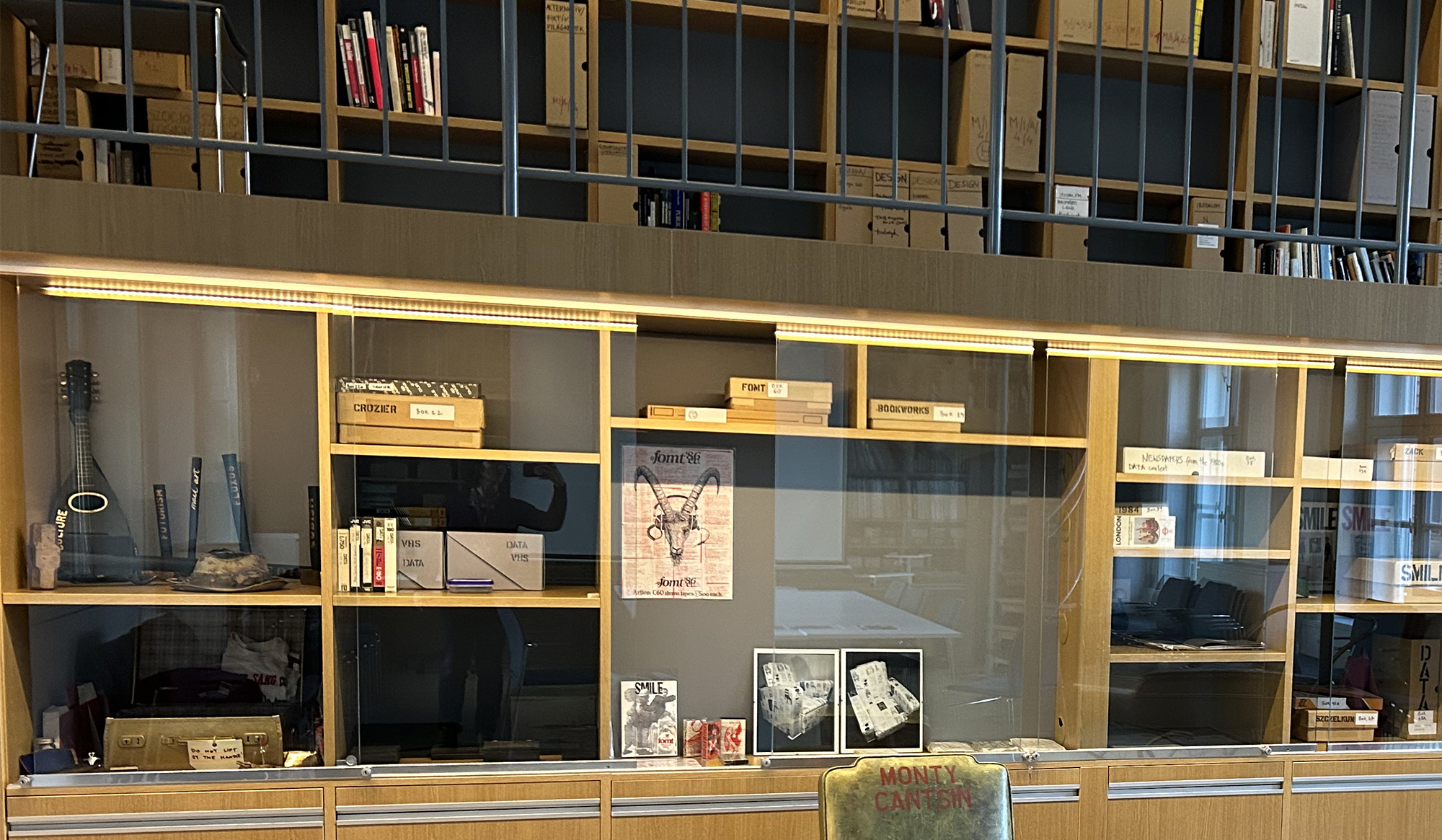
Selected material from the Attic Archive displayed in Artpool’s media space
Contributors biographies:
Flóra Barkóczi
Art historian and researcher at the Research Department of KEMKI (Central European Research Institute for Art History, Museum of Fine Arts, Budapest), and a lecturer at the Intermedia Department of the Hungarian University of Fine Arts. Her research focuses on the impact of the web on artistic practices, with particular attention to the role of technological utopianism in the post-socialist transition. She is the founder and editor of netartdothu, an online platform dedicated to archiving Hungarian net art from the 1990s.
Judit Bodor
Curator and researcher, currently Programme Director of the MFA Fine Art and MFA Curatorial Practice (Art & Design) at the University of Dundee, Scotland. Her research focuses on post-1970s counterculture, which led her to work extensively with artist archives since the early 2000s. She develops both temporary projects and long-term infrastructures as “living archives” concerned with preserving not only the often “unruly” materiality of artist archives, but also the anti-establishment artistic methods that underpin them. She is the co-curator of archivuminternetwork: The 30 Years of artpool.hu (2026) and leads the international research network Curating the Digital Attic Archive, which reconnects and reactivates the dispersed Attic Archive through open-source approaches. These projects build on her long-term interest in post-1970s countercultural and networked art, with previous work including Curating Living Archives (2021), Left Performance Histories (nGbK, Berlin, 2018), and Silent Explosion: Ivor Davies and Destruction in Art (National Museum Wales, 2016).
Elly Clarke
Artist & researcher interested in the performance and the burden (‘the drag’) of the physical body and object in an increasingly digitally mediated world. They work with analogue & digital photography, performance, music, curating, community-based projects and [the archive of] a drag queen character called #Sergina, who, over a 10-year period, online and in various sites, was played [out] not only by Clarke but by others too. In 2023, Clarke curated 'Dragging the Archive - a personal re:encounter with Franklin Furnace's cyber beginnings' at Pratt Institute in Brooklyn, New York. Their practice led PhD 'Is My Body out of Date? The drag of physicality in the digital age' was completed in 2025 at Goldsmiths, University of London. Clarke teaches in many places and is a founder of CHASE Climate Justice Network.
Roddy Hunter
Artist and researcher working across performance, conceptual, and new media art. His practice explores the intersections of art, philosophy, media, and technology through artistic research that addresses questions of time and place. Central to his work is an interest in how experience and knowledge unfold over time, are mediated by location and context, and are constructed into personal and collective histories. He has been recognised internationally as a performance artist and an art educator since the 1990s and has held several teaching and leadership roles in higher education, including his current role in the School of Fine Art at The Glasgow School of Art.
Viktória Monhor
Intermedia artist and performer. Viktoria graduated from the Intermedia Department of the Hungarian University of Fine Arts. Since 2015, she has been a regular participant in the Independent Art Department's activities. She approaches artistic activity as an expanded social practice, capable of articulating a critical attitude as a space for free thinking. The core of her artistic practice lies in reflections on social issues and the examination of familial and personal situations. Currently, her research focuses on questions of (re)connecting with nature, at the intersection of deep ecology and activism.
This event is part of the international research network project Curating The Digital Attic Archive: A Case Study for Open-Source Approaches to Artists’ Archives, financially supported by the Royal Society of Edinburgh and delivered in partnership with the Museum of Fine Arts, Budapest.